


'%20x='0'%20y='0'%20height='100%25'%20width='100%25'%20%0A%20%20%20%20%20%20%20%20%20%20xlink%3Ahref='data:image/jpg;base64,/9j/2wBDAAYEBQYFBAYGBQYHBwYIChAKCgkJChQODwwQFxQYGBcUFhYaHSUfGhsjHBYWICwgIyYnKSopGR8tMC0oMCUoKSj/2wBDAQcHBwoIChMKChMoGhYaKCgoKCgoKCgoKCgoKCgoKCgoKCgoKCgoKCgoKCgoKCgoKCgoKCgoKCgoKCgoKCgoKCj/wAARCAAGAAoDASIAAhEBAxEB/8QAFgABAQEAAAAAAAAAAAAAAAAAAAUG/8QAIhAAAgEDBAIDAAAAAAAAAAAAAQIDAAQRBQYSMRMiQVFh/8QAFQEBAQAAAAAAAAAAAAAAAAAAAgP/xAAbEQACAgMBAAAAAAAAAAAAAAABAgARAwQhEv/aAAwDAQACEQMRAD8AkwaZHcrdWEs/M2lkkhuPDxdlKCTGA+MknJPf7WRj3puJY1W33DqKQAARrwX1X4Hf1SlHCzFA19lNgAN5rk//2Q=='%3E%3C/image%3E%3C/svg%3E)

Winter 2026 Anime Winter 2026 Anime has become one of the most sequel-intensive seasons in recent history, as the industry becomes more and more dependent on an existing intellectual property to support overcrowded release schedules. Having over 20 returners in the first three months of 2026, places an odd burden on sequels to have a reason to exist and not rely on the brand name. To the audience, this season has turned into a test of which productions can substantially develop and which become stagnant. Consequently, it has been inevitable to compare with the past seasons.
The qualities of Winter 2026 Anime that have been especially interesting are the extreme quality differences between those that perfected their storytelling and production pipelines and those that could not meet the increased expectations. Other shows took the hiatus between seasons to re-establish the rhythm of action, improve the process of animation, and address more powerful storylines in their material. Others though, showed signs of cracks via hurried narratives, lopses in animation or imaginative exhaustion. Combined, it provides a perfect example of how a franchise might be promoted or negatively impacted by a sequel.
Winter 2026 Anime Sequels That Surpassed Expectations — And Those That Fell Short
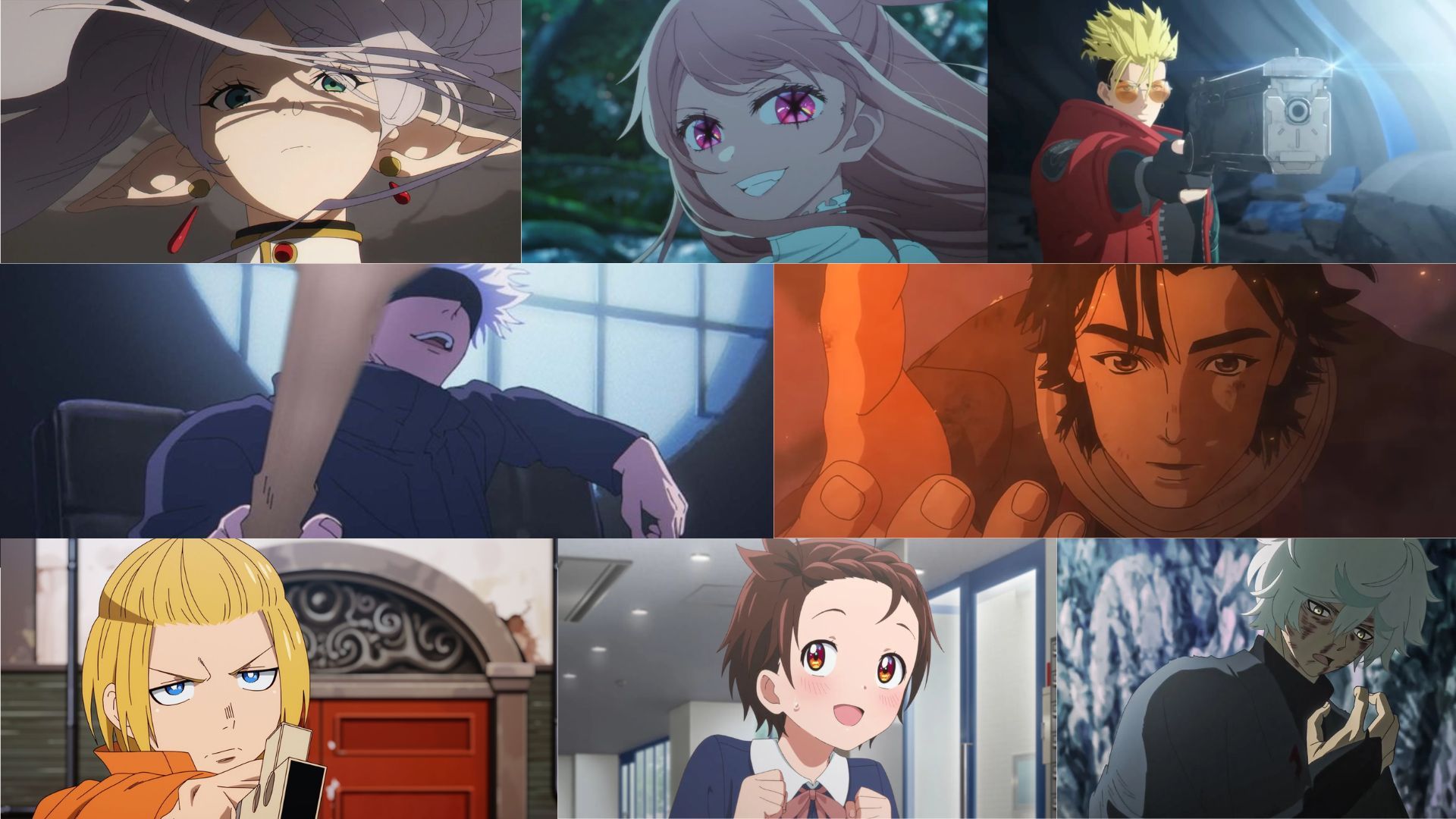
Frieren: Beyond Journey’s End Season 2 (Surpassed)
The most obvious case of an anime that surpassed its predecessor is the Frieren: Beyond Journey Season 2 among the Winter 2026 Anime. Whereas Season 1 has been hailed as slightly melancholic and poignant in its reflections, Season 2 has expanded the horizons without losing the sense of restraint. The series is full of speculation, but Madhouse increased the action choreography in post-exam arcs. This ratio enabled Frieren to be more expansive yet personal, which is not easy to accomplish.

In terms of narrative, Season 2 was more inclined to the theme of legacy and memory, with flashback and new party dynamics to add richness to the character development presented by Frieren. The enhanced visual consistency among episodes also tackled the slightest backlash of the mid-cour strain of production of Season 1. It always led the Winter 2026 Anime in audience polls and critical rankings, cementing itself as a golden standard sequel.
Oshi no Ko Season 3 (Surpassed)
Oshi no Ko Season 3 came into Winter 2026 Anime under a lot of pressure after a divisive second season. Instead of receding, the series tripled on its more pessimistic psychological motifs and critique of the industry. Doga Kobo became more focused on its visual language, practical application of color contrasts and even more symbolic frames to express emotional instability. It was a significant development in comparison with previous seasons.

The internal fragmentation of B-Komachi and the growing self-destructive determination of Aqua were the subject of the season that added narrative unity that others perceived as missing of Season 2. Notably, the adaptation pacing became more refined and it did not shift between the tones so abruptly, which in the past disoriented the viewers. Consequently, Oshi no Ko Season 3 became among the most successful shows of Winter 2026 Anime and turned doubt into a new applause.
Hell’s Paradise Season 2 (Surpassed)
Hell’s Paradise Season 2 within Winter 2026 Anime was an example of how a sequel can build on the foundation of the first season. In a manner, Season 1 served as world-building and character setup, whereas Season 2 provided as much conflict and ideological tension as possible. MAPPA’s action direction became more coherent, favoring longer cuts and spatial clarity during Tensen battles. This addressed earlier criticisms of visual chaos.

The character relationships also grew, especially the role of making an alliance in the most adverse circumstances. Thematically unity versus individual survival provided Season 2 with a narrative structure lacking in the original. Hell’s Paradise is an example of a delayed payoff that can be valuable when done purposefully, as demonstrated in the context of Winter 2026 Anime.
Trigun Stargaze Season 2 (Surpassed)
Trigun Stargaze Season 2 had been a silent application of being one of the most artistically ambitious entries in Winter 2026 Anime. Continuing with the unique approach to CG used by Studio Orange, the sequel perfected the facial animations and the scene elements, making the world more physical. The added emotional resonance of the series came through the extended role of Meryl Stryfe.

The season also helped to dissolve long-teased lore of Knives and Vash and clarified confusion that remained after Season 1. Instead of depending on nostalgia, Trigun Stargaze adopted the approach of reinterpretation and it was a tactic that worked in its favor, critically speaking. It is one of the examples of intelligent re-invention among Winter 2026 Anime.
Jujutsu Kaisen Season 3 (Needs to Up Its Game)
Even though it is widely popular, Jujutsu Kaisen Season 3 has been among the more controversial sequels of Winter 2026 Anime. Although separate fight scenes were still aesthetically pleasing, the general rhythm of the Culling Game arc was tight. Narrative beats which demanded emotional breathing space were usually hurried through. That weakened the dramaticity which characterized Season 2.

There was also production strain evident in transitional scenes with easily noticeable dips in animation consistency. These inadequacies were magnified in the case of a franchise of that level of standards. In Winter 2026 Anime, winter 2026 Jujutsu Kaisen Season 3 depicts that spectacle cannot be used to redeem structural problems.
Fire Force Season 3 (Needs to Up Its Game)
Fire Force Season 3 has been plunging into Winter 2026 Anime with lots of promise of narrative escalation, although this has been handled inconsistently. Although the flame effects of David Production are impressive to the eyes, narrative has been challenged by monotony. Villain reveals echoed earlier seasons without delivering fresh thematic stakes.

The growth of the characters, especially the secondary squad members, did not improve even after more screen time was given. This had an effect of wheel-spinning the narrative that slowed the momentum. Fire Force Season 3 is tentative, not confident, compared to 2026 Winter stronger sequels in Anime.
Medalist Season 2 (Needs to Up Its Game)
As a quieter sports entry, Medalist Season 2 faced different challenges. Whereas ice-skating animation retained the fluidity, the character arcs did not provide a novelty of emotions as they did in Season 1. The story had many repeats of old beats with no major escalations.

There was also a lack of obvious competitive interests that lowered tension between episodes. This was a trend that was discernible to a genre that boasts of progression. In Winter 2026 Anime, Medalist Season 2 is competent and unimposing.
Oedo Fire Slayer Season 2 (Needs to Up Its Game)
Some of the most elaborate background art in Winter 2026 Anime has been shown in Oedo Fire Slayer Season 2, but technical ambition failed to translate to narrative clarity. Quickly shot scenes and uneven animations of the characters broke the immersion. Emotional scenes were not always built up enough to give a payoff.

Although the setting is compelling, the sequel did not leverage its strengths due to inconsistent direction. These shortcomings were noticeable in a season full of competitions. The series, as a part of Winter 2026 Anime, highlights the fact that polish should not limit itself only to visuals.
 Trending
Overall, Winter 2026 Anime highlights the increasing distance between sequels that develop with purpose and those that map too much on what is already popular. Frieren, Oshi no Ko, Hell, and Trigun Stargaze have shown that pacing, clarity of theme and refined production can take a continuation above what it started with. On the other hand, weaker entries demonstrate the way in which goodwill can be undermined through repetition and hastened performance. Finally, Winter 2026 Anime confirms a mere fact: in the world of the sequels, development is no longer a privilege, but a necessity.


 Reply
Reply


