


'%20x='0'%20y='0'%20height='100%25'%20width='100%25'%20%0A%20%20%20%20%20%20%20%20%20%20xlink%3Ahref='data:image/jpg;base64,/9j/2wBDAAYEBQYFBAYGBQYHBwYIChAKCgkJChQODwwQFxQYGBcUFhYaHSUfGhsjHBYWICwgIyYnKSopGR8tMC0oMCUoKSj/2wBDAQcHBwoIChMKChMoGhYaKCgoKCgoKCgoKCgoKCgoKCgoKCgoKCgoKCgoKCgoKCgoKCgoKCgoKCgoKCgoKCgoKCj/wAARCAAGAAoDASIAAhEBAxEB/8QAFgABAQEAAAAAAAAAAAAAAAAAAAMG/8QAIhAAAgAFAwUAAAAAAAAAAAAAAQIAAwQREgUHIQYTI8HR/8QAFQEBAQAAAAAAAAAAAAAAAAAAAQP/xAAYEQACAwAAAAAAAAAAAAAAAAAAAQMEUv/aAAwDAQACEQMRAD8Aw8vfDqQPQYyqRVXuGaqghZ2TcXF+LAAC3uJHfHX2JZqahyPJ8C/IQiSpwYQuzLpn/9k='%3E%3C/image%3E%3C/svg%3E)

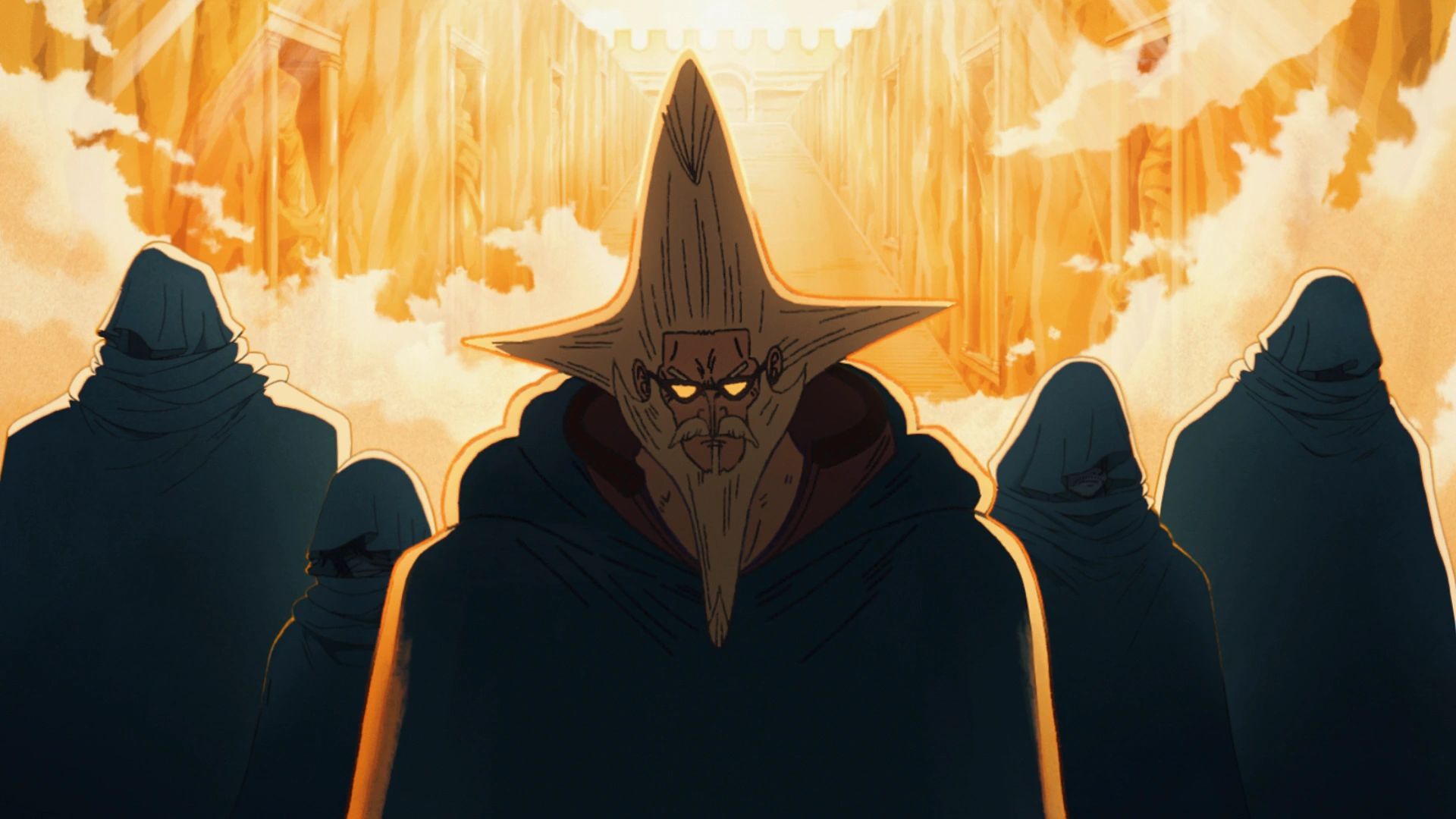
The Final Saga of One Piece has taken a keen interest in the secret power systems of the World Government, and the introduction of the Holy Knights has given One Piece a new institutional threat instead of a glitzy villain-group. The story has always given emphasis on systemic oppression, inheritance of will, and political hierarchy rather than temporary antagonist groups ever since its inception in 1997. The Holy Knights (also called the Knights of God) are made to appear as elite executors of the authority of Celestial Dragons, and this, as well as long-standing criticism of absolute power.
The decision not to make the Holy Knights into the One Piece variant of the Akatsuki was the right creative choice to make since it maintains a thematic consistency and does not turn the Final Saga into a villain-of-the-week format.
Threats in a story are most effective when they are systemic rather than driven by individuals seeking personal glory. This approach ensures that the Holy Knights are perceived as an extension of the World Government’s ideology, not a freelance force with fragmented or self-serving motivations.

In the worldbuilding of One Piece, the Holy Knights are ranked higher than Cipher Pol as well as even Marine Admirals within certain areas of authority, notably issues of the Celestial Dragons. The fact that they have the power to come in directly and intervene in the Mariejois conflicts makes them political weapons and not battlefield celebrities. This difference supports the idea of the story, which has a focus on control by hierarchy rather than reputation.
The Akatsuki analogy is commonly drawn due to their numbered order and status as elite characters, yet the story has never had to use the removal of one of the villains in a series to keep the tension going. Eiichiro Oda does not customarily indulge in lone arcs developed by slaying one named villain after another. One Piece does not need to face narrative fatigue, as it is not trying to imitate the Akatsuki model at the point of the storyline that matters most.
The other important distinction is the element of symbolism and loyalty in One Piece. The Holy Knights are not free agents, nor do they have abstract ideals such as conquering the world through anarchy. They are loyal to Imu and the Five Elders, which makes them deeply embedded in the established power system, which, in turn, corresponds to the picture of evil presented, namely, the structured, hereditary, and shielded by the law.
Reasons why One Piece gains by not having an Akatsuki-style Holy Knight Group
The Holy Knights can be considered a form of institutional violence and not an individual desire, which reinforces ideological interests in the Final Saga. The Holy Knights are not a single one, as the Akatsuki were defeated in separate battles, battling each other individually, but not as a group. Such a design makes sure that conflict escalation is fixed to revolution and systemic collapse.
The image of power also makes a distinction between the Holy Knights and the ordinary elite villain teams. Recent revelations also hint at regenerative powers which can only be opposed by higher-ranking Conqueror Haki, as such that are directly compatible with the narrative, with the confrontations of Yonko level. This power scaling strengthens the tension of One Piece over time, and not the quick defeats in the series.

Elbaf arc is an example of this narrative restraint in One Piece. The Holy Knights are portrayed defeating giants in large numbers, and the threat is created not by the extensive backstory but by their sheer presence. This strengthens the feeling of dread, as well as it can afford its core cast and global stakes instead of villain-focused narratives.
 Trending
Finally, One Piece acquires narrative power by making the Holy Knights seem impregnable guardians and not tragic outcasts. Their presence complicates the hopelessness of the Revolutionary Army and the Straw Hats, as they are forced to stress that real liberty in One Piece means destroying a whole structure. Eiichiro Oda maintains thematic consistency by keeping them apart and has sustained the Final Saga as an action dedicated to liberation, not to spectacle


 Reply
Reply


