


'%20x='0'%20y='0'%20height='100%25'%20width='100%25'%20%0A%20%20%20%20%20%20%20%20%20%20xlink%3Ahref='data:image/jpg;base64,/9j/2wBDAAYEBQYFBAYGBQYHBwYIChAKCgkJChQODwwQFxQYGBcUFhYaHSUfGhsjHBYWICwgIyYnKSopGR8tMC0oMCUoKSj/2wBDAQcHBwoIChMKChMoGhYaKCgoKCgoKCgoKCgoKCgoKCgoKCgoKCgoKCgoKCgoKCgoKCgoKCgoKCgoKCgoKCgoKCj/wAARCAAGAAoDASIAAhEBAxEB/8QAFgABAQEAAAAAAAAAAAAAAAAAAAUH/8QAGxAAAgMBAQEAAAAAAAAAAAAAAQIABBEDM7H/xAAUAQEAAAAAAAAAAAAAAAAAAAAA/8QAGBEAAgMAAAAAAAAAAAAAAAAAAAECIUH/2gAMAwEAAhEDEQA/AMJW86Jw3WcciOYbCo0EHQRK1C4wo1xg81+RERVDD//Z'%3E%3C/image%3E%3C/svg%3E)

Sentenced To Be A Hero Episode 5 is one of the most significant twists in the show as it changes the story to focus on the organized battlefield satire and turns into an argument of internal conspiracy and moral corruption. Since its debut, Sentenced To Be A Hero has examined the forced conscription of criminals into divine military service, blending dark humor with institutional critique. The series centers on Xylo’s squad of coerced “heroes,” each drafted under threat rather than virtue. Episode 5 increases the level of ideological tension and the frontline war.
The scenes that stand out in Sentenced To Be A Hero Episode 5 are the full villainy appearance of Tsav, the revelation of the human treachery in Muried Fortress, the introduction of goddesses and anti-goddesses dynamics, and the disaster of the fortress defenses being weakened as a result of a well-organized faerie invasion. Sentenced To Be A Hero uses this episode to transition from character ambiguity to open instability. The tonal shift is deliberate and structural. Episode 5 firmly establishes that the greatest threat may not be external alone.
The episode opens during the intensifying Muried Fortress siege, where faerie forces apply sustained pressure on outer defensive layers. Xylo uses a reinforcement policy that involves the use of miner units to stabilize structural weak areas and support barricades. Internal morale is weak in spite of this preparation. Sentenced to Be A Hero underlines the mental burden of having to fight against an opponent who develops rapidly.

Tsav’s role becomes central early in the episode. Flashbacks confirm his history as a serial killer who selectively spared individuals he deemed “favorites,” killing others without remorse. His conscription into hero service is revealed not as redemption but as weaponization by the church. Sentenced To Be A Hero strips away any ambiguity regarding his moral alignment.
On the battlefield, Tsav unleashes flamboyant and overwhelming combat abilities. His power output surpasses that of several squad members combined, neutralizing waves of faerie attackers with minimal effort. However, collateral damage to infrastructure and disregard for allied positioning expose his volatility. Sentenced To Be A Hero carefully contrasts raw power with psychological instability.
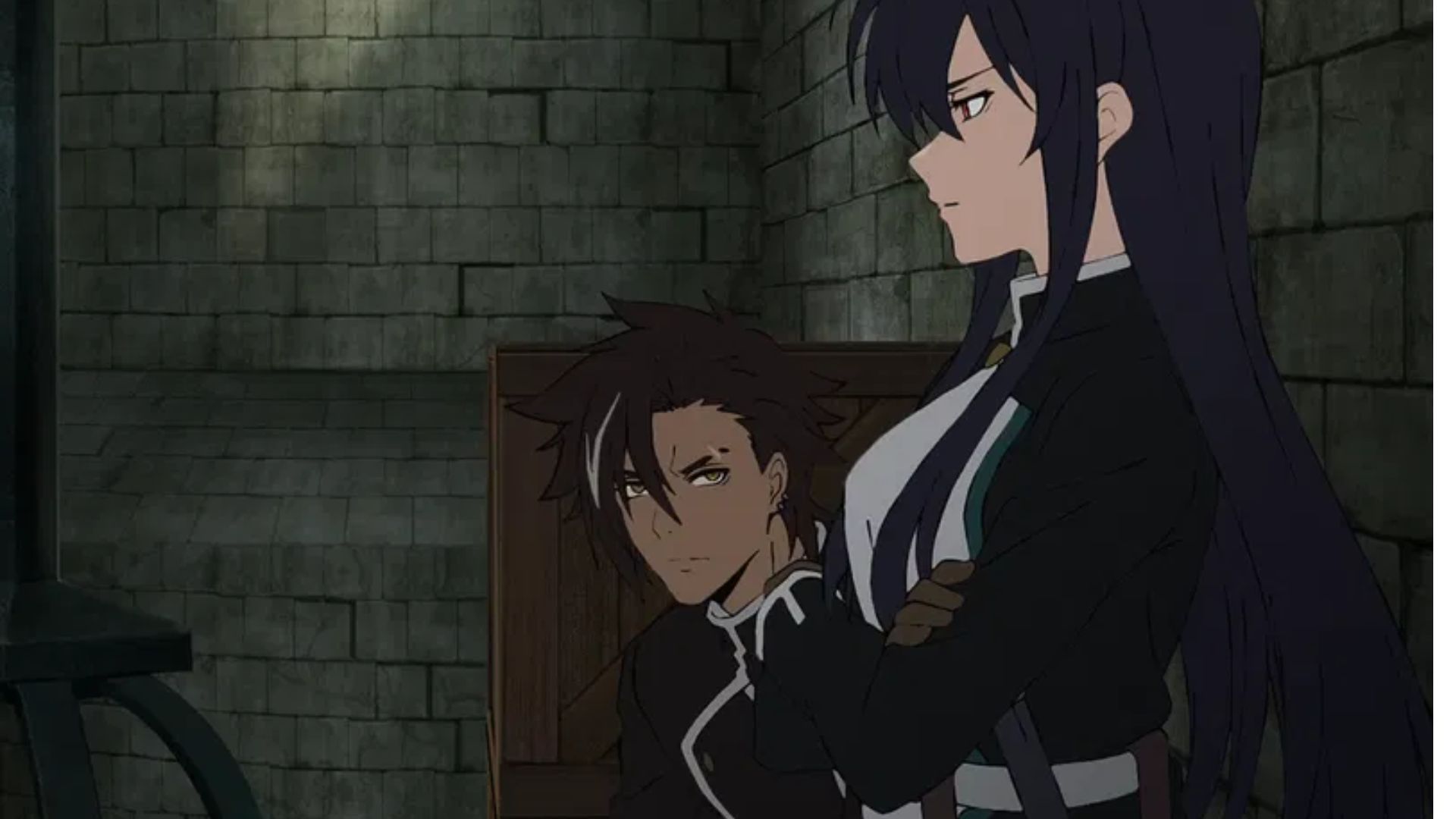
Knuckleduster’s reaction serves as a narrative counterweight. He senses Tsav’s internal fracture and questions whether such a figure should be deployed in coordinated operations. The tension between effectiveness and control becomes explicit. Sentenced To Be A Hero underscores that institutional desperation has blurred ethical boundaries.
Parallel to frontline combat, Episode 5 introduces a newly revealed goddess paired with a Holy Knight. Unlike Teoritta, whose laboratory-engineered origins framed her as a manufactured divine tool, this goddess exhibits emotional vulnerability and seeks affection from her assigned knight. Sentenced To Be A Hero uses this contrast to critique the church’s uneven divine structures. The depiction reveals that not all goddesses conform to militarized detachment.
Betrayal and Institutional Fracture in Sentenced To Be A Hero
The most consequential highlight of Sentenced To Be A Hero Episode 5 emerges through confirmed human betrayal inside Muried Fortress. Venetim’s earlier warnings prove accurate when internal operatives sabotage gate mechanisms and communication routes. Defensive sequences fail at critical moments due to deliberate interference. Sentenced To Be A Hero transforms suspicion into a verified conspiracy.

As structural systems collapse, faerie forces breach secondary defensive layers. The siege shifts from perimeter defense to interior containment. Xylo’s miner reinforcements slow the advance, but cannot compensate for internal sabotage. Sentenced to Be A Hero presents a battlefield that is compromised both physically and morally.
In light of these revelations, Kivia struggles internally. She struggles with the feeling of guilt, with divided loyalties and the significance of internal corruption. The emotional weight of institutional mistrust manifests in her indecisiveness in critical situations. Sentenced To Be A Hero uses her arc to humanize the broader collapse.
The episode closes without resolution, emphasizing uncertainty rather than triumph. Tsav remains unstable, traitors remain active, and the faerie advance continues. Sentenced To Be A Hero intentionally rejects the catharsis associated with heroism, which drives its attack on forced heroism. The castle is there, but the foundations of that castle, both physical and ideological, are broken.
 Trending
To sum up, Sentenced To Be A Hero Episode 5 presents the most impactful advancements in the form of the confirmed murderous history of Tsav, the revelation of the human collaborators, the introduction of divergent goddess relations, and the destabilisation of Muried Fortress. As the episode shifts the series from mere siege warfare to systemic breakage, it changes the series' direction. Sentenced To Be A Hero continues its exploration of heroism by force, institutionalized exploitation, and betrayal. Episode 5 is one of the structural inflexion points that redefine the course of the conflict.




 Reply
Reply


