


'%20x='0'%20y='0'%20height='100%25'%20width='100%25'%20%0A%20%20%20%20%20%20%20%20%20%20xlink%3Ahref='data:image/jpg;base64,/9j/2wBDAAYEBQYFBAYGBQYHBwYIChAKCgkJChQODwwQFxQYGBcUFhYaHSUfGhsjHBYWICwgIyYnKSopGR8tMC0oMCUoKSj/2wBDAQcHBwoIChMKChMoGhYaKCgoKCgoKCgoKCgoKCgoKCgoKCgoKCgoKCgoKCgoKCgoKCgoKCgoKCgoKCgoKCgoKCj/wAARCAAGAAoDASIAAhEBAxEB/8QAFgABAQEAAAAAAAAAAAAAAAAAAAYH/8QAHxAAAgICAQUAAAAAAAAAAAAAAQIABBESAwYhIkFx/8QAFQEBAQAAAAAAAAAAAAAAAAAAAQP/xAAYEQADAQEAAAAAAAAAAAAAAAAAAQIDEf/aAAwDAQACEQMRAD8AyihXUdPPU1Qm6/Ix5CvkhVSe32RTKdjtjPvAiJZ5z1jF0z//2Q=='%3E%3C/image%3E%3C/svg%3E)

For Christopher Nolan, time has never been just a storytelling device but the invisible force driving the entire narrative. From the fractured memories of Memento to the dream layers of Inception, the ticking urgency of Dunkirk and the mind-bending temporal warfare of Tenet, Christopher Nolan’s filmography has repeatedly treated time as something far more powerful than a backdrop.
With the acclaimed filmmaker ready to present his most ambitious project, The Odyssey, to the world, he has finally opened up about why the concept of time appears so prominently across his work.
In a recent interview, Christopher Nolan revealed the works that shaped his understanding and fascination with time, which eventually developed into using it as a cinematic tool:
''Reading as a kid, Graham Swift's Waterland, which fragments time in really interesting sort of parallel narrative strands. I read that round about the same time as I watched Alan Parker's film of Pink Floyd The Wall...Where he's mixing time in the most extraordinary way... I think that very much started me thinking about how you can use time in narrative to really create interesting effects.''
More on this in our story.
Why does Christopher Nolan use time as a major character in his movies?
Christopher Nolan has never shied away from his fascination with time, a central theme in all his movies. In many of his past interviews, the filmmaker has expressed that time is the most cinematic of subjects and he developed an early fascination with the concept through books, songs and movies.
In one of his interviews, Christopher Nolan explored the possibility of using time in cinema. The filmmaker revealed that before the invention of the camera, humans had no way of seeing time in reverse, sped up or slowed down. Calling it a really productive relationship, Nolan agreed that all his projects explore the relationship between humans and time:
''I always harbored this desire to create a story in which the characters would have to deal with that as a physical reality.''
Each of Christopher Nolan's past films explores a different relationship with time and how it affects his characters. Starting with Memento, the film uses time as a structural and narrative tool to reflect the protagonist's short-term memory loss, telling the story in reverse. Beloved and highly successful projects like Inception and Interstellar use the whole 'dream inside a dream' scenario and time dilation to illustrate how the subjective experience of time alters reality.
Additionally, Dunkirk utilizes a literal ticking clock to build palpable tension, merging three separate timelines over land, sea and air. While Christopher Nolan's early filmography is heavily inspired by the concept of time, his latest projects, namely Tenet and Oppenheimer, take his fascination up a notch and delve into time inversion and subjective & objective timelines.
Christopher Nolan's The Odyssey will follow a non-linear narrative
For a filmmaker who has experimented multiple times, the upcoming highly-anticipated and one of the most ambitious projects of his life will follow a non-linear narrative. Based on Homer's eponymous ancient Greek epic, The Odyssey follows Odysseus, the legendary Greek king of Ithaca, on his long and perilous journey home, following the Trojan War. The movie chronicles his encounters with mythical beings and his attempts to reunite with his wife, Penelope.
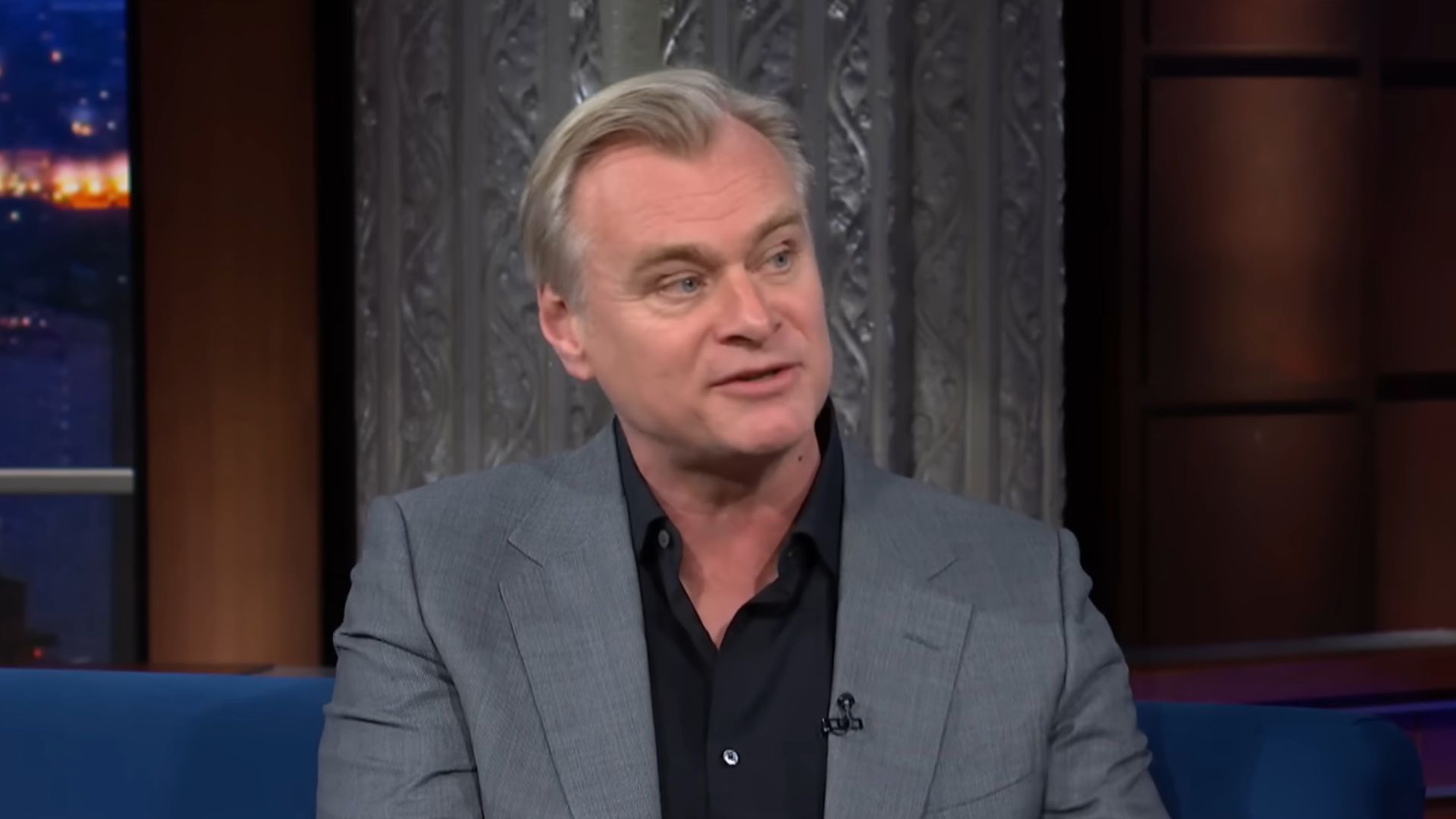
Speaking on The Late Show with Stephen Colbert, Christopher Nolan revealed that his upcoming film will mimic the structure of Homer's epic and follow a non-linear narrative:
"The story is written in a nonlinear way. It's the original kind of nonlinear narrative."
Like Homer's epic, the filmmaker revealed that The Odyssey will open not with Odysseus' journey but in Ithaca with the Song of Odysseus, where people are discussing the King's 20-year-long absence and questioning his wife Penelope's decision to wait for her husband, while eligible suitors, namely Antinous, pressure her into remarrying.
In addition to a non-linear narrative, The Odyssey will deliver on Nolan's fascination with time by following two journeys: Odysseus' and his son Telemachus, who was a mere child when his father left on his long voyage and is determined to find him now.
The Odyssey is scheduled for a theatrical release on July 17.
 Trending
For the latest scoops on your favorite TV shows and movies, follow SoapCentral.

Love movies? Try our Box Office Game and Movie Grid Game to test your film knowledge and have some fun!



 Reply
Reply


