


'%20x='0'%20y='0'%20height='100%25'%20width='100%25'%20%0A%20%20%20%20%20%20%20%20%20%20xlink%3Ahref='data:image/jpg;base64,/9j/2wBDAAYEBQYFBAYGBQYHBwYIChAKCgkJChQODwwQFxQYGBcUFhYaHSUfGhsjHBYWICwgIyYnKSopGR8tMC0oMCUoKSj/2wBDAQcHBwoIChMKChMoGhYaKCgoKCgoKCgoKCgoKCgoKCgoKCgoKCgoKCgoKCgoKCgoKCgoKCgoKCgoKCgoKCgoKCj/wAARCAAGAAoDASIAAhEBAxEB/8QAFgABAQEAAAAAAAAAAAAAAAAAAAQH/8QAIRAAAQIGAgMAAAAAAAAAAAAAAQMEAAIFBhESEzFBY9H/xAAUAQEAAAAAAAAAAAAAAAAAAAAA/8QAFBEBAAAAAAAAAAAAAAAAAAAAAP/aAAwDAQACEQMRAD8AzOi3RVSk8uNZwnO+VURa7cCZAABydca9DGMeYnmvauiYgPevVJ8hCA//2Q=='%3E%3C/image%3E%3C/svg%3E)

Julian Schnabel's In The Hand of Dante is already one of the most debated films of this year because of its unresolved ending. Critics believe that the screenplay is unpredictable and uneven and that the story moves back and forth, but the connection between the two eras does not always feel convincing.
The Netflix drama runs for 153 minutes and shifts the screenplay between two layers of the plot. The first one is about Dante Alighieri, who wrote a manuscript named The Divine Comedy in the 14th century.
The next one is about a modern New York writer named Nick Tosches, who is hired by a mafia boss to steal Dante's manuscript.
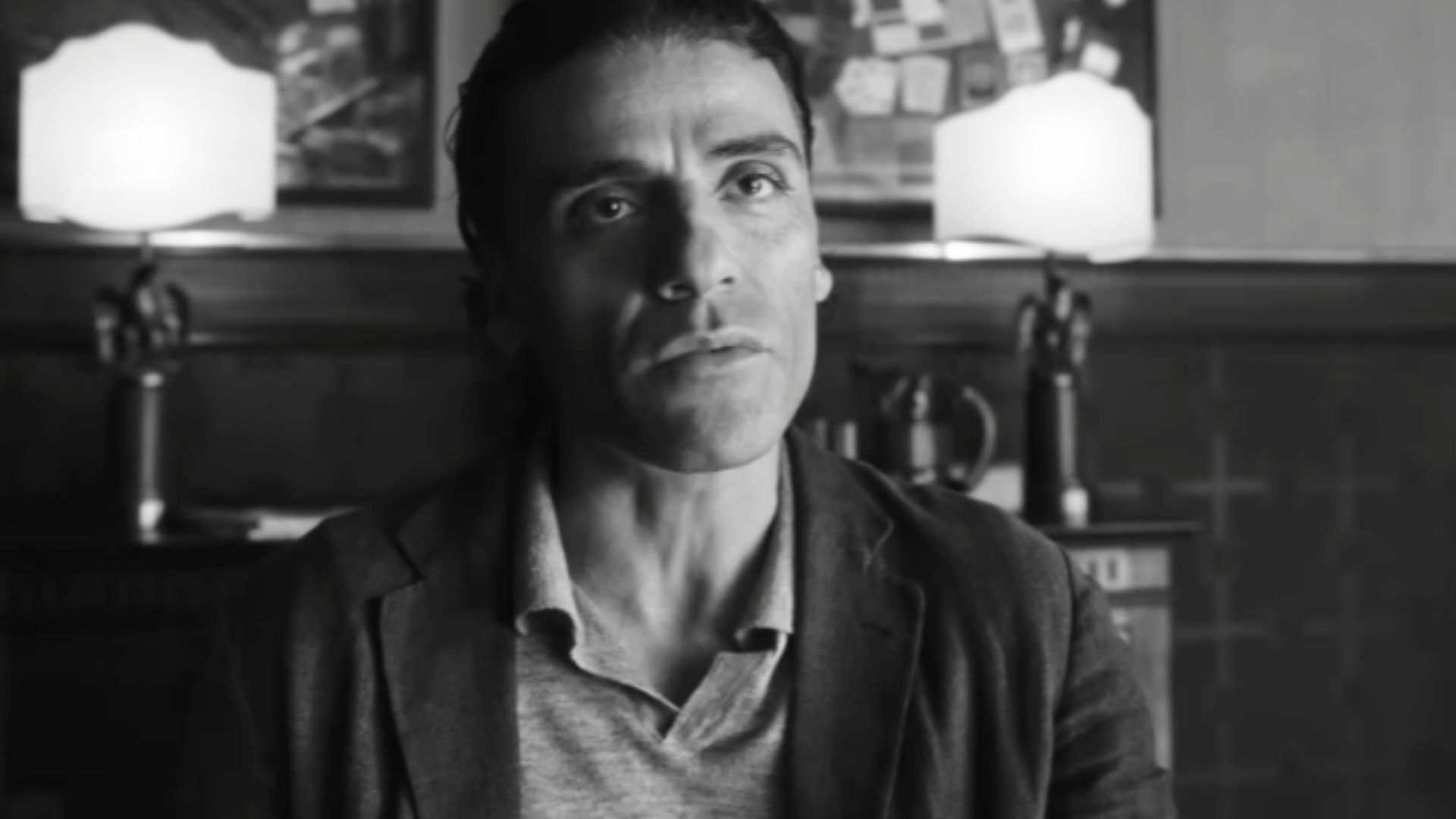
Oscar Isaac plays both Dante and Tosches. In the final scene, Dante's and Tosches's worlds merge into a surreal and timeless landscape where the physical boundaries between 14th-century Italy and modern-day New York collapse. The moment leaves Tosches to meet the poet's soul, which he spent his entire life finding.
Continue reading more about why In The Hand of Dante lacks a proper ending.
Disclaimer: This article also contains the writer's opinion. Please be advised.
In The Hand of Dante: Dante's story cannot end happily with Gemma

Dante's story cannot end with a simple happy resolution because history shows his life never had one. He was not only a poet but also a passionate politician in Florence.
At that time, the city was torn apart by a violent civil war between the Black Guelphs and the White Guelphs, the group Dante supported. He created a flawless vision of heaven and cosmic justice while living in exile, far from home, and then died in misery.
This contrast is the heart of the story. When an artist strives for perfection in art, his real life often remains broken and unfinished. Giving Dante a neat and satisfying end would go against that central truth.
Confusion between the timelines of In The Hand of Dante
In the climax, the film deliberately brings the two timelines together instead of letting them unfold one after the other. Nick is shown as a spiritual reflection of Dante. Since the story treats time not as a straight path but as a variable that follows the convergence theory, there is no clear ending.
The narrative stops instead of closing and leaves the audience inside a strange, ongoing cycle of human desire. If the film had embraced the true spirit of the divine comedy from the beginning, it might have worked better in tone or at least avoided feeling overly serious and self-important.
The film also makes a serious mistake in its flashback by showing the same actors in two different characters and costumes from two different eras. Consequently, it distracted audiences instead of tying past and present together.
The result is not far from the strangely costumed vision of Francis Ford Coppola's Megalopolis. Dante starts writing the manuscript with an image of being lost in a dark forest, which is a symbol of confusion and spiritual crisis. He describes it as frightening, rough, and savage, where the straight path of life has disappeared.
How does In The Hand of Dante end?

At the end of In The Hand of Dante, Tosches kills Joe and Louie and decides to keep the manuscript for himself. After that, he struggles with his feelings for Giulietta and dreams of living quietly with her and with the money from the manuscript. Meanwhile, Rosario hunts them down, captures Tosches, and forces Giulietta to hand over the text.
Within a few seconds, Rosario shoots Giulietta and takes the manuscript, but unfortunately, his girlfriend, Susanna, kills him. Susanna insists the manuscript belongs to her museum and to Italy. Tosches tricks her by calling her Beatrice and making her believe in a reborn love story between Beatrice and Dante.
He then pushes Susanna to her death and returns to Giulietta, proving that she is his true love. At this point, the two timelines connect with each other. Tosches and Giulietta now hold the manuscript and strike a deal with Mephistopheles to begin a new life. They settle happily on an island, while the film cuts back to the past, showing Dante and Gemma in a tender relationship.
The scenes of betrayals and backstabbing cross the line from a tense thriller into pure camp. Several leading reviewers argued that the sudden character deaths feel less like serious drama and more like an unintentional spoof of poor melodrama. Thus, it breaks the audience's emotional connection right at the height of the story.
 Trending
Follow Soap Central for more updates on In The Hand of Dante.

Love movies? Try our Box Office Game and Movie Grid Game to test your film knowledge and have some fun!



 Reply
Reply


