


'%20x='0'%20y='0'%20height='100%25'%20width='100%25'%20%0A%20%20%20%20%20%20%20%20%20%20xlink%3Ahref='data:image/jpg;base64,/9j/2wBDAAYEBQYFBAYGBQYHBwYIChAKCgkJChQODwwQFxQYGBcUFhYaHSUfGhsjHBYWICwgIyYnKSopGR8tMC0oMCUoKSj/2wBDAQcHBwoIChMKChMoGhYaKCgoKCgoKCgoKCgoKCgoKCgoKCgoKCgoKCgoKCgoKCgoKCgoKCgoKCgoKCgoKCgoKCj/wAARCAAGAAoDASIAAhEBAxEB/8QAFgABAQEAAAAAAAAAAAAAAAAAAAQH/8QAIBAAAQMEAgMAAAAAAAAAAAAAAQACAwQFESETMRQicf/EABUBAQEAAAAAAAAAAAAAAAAAAAQF/8QAGhEBAAIDAQAAAAAAAAAAAAAAAQACAwQRIf/aAAwDAQACEQMRAD8AyepuFys90hqKSeMGIB7HFuwexr4pxWeQBNKDySe7sdZOyiIGelTwJQ17KvWf/9k='%3E%3C/image%3E%3C/svg%3E)

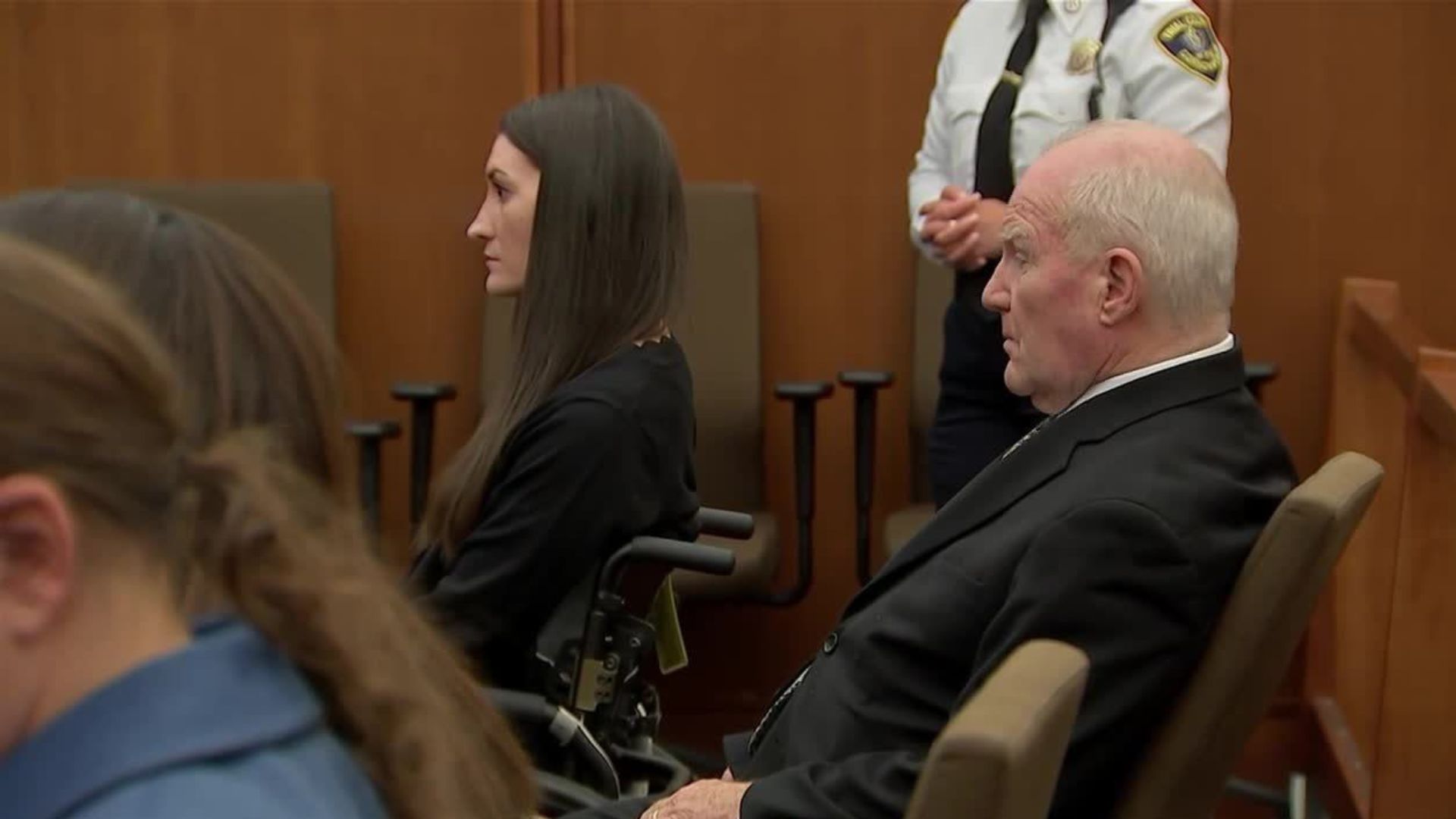
Today, August 27, 2026, is a crucial day for Lindsay Clancy's trail. It has been a month since the trial began, and today is the day the judge will give jury instructions and attorneys will present their closing arguments on the case. The jury will then go through all evidence and arguments before giving a verdict, which might take up to hours or several days.
Lindsay Clancy was charged with first-degree murder of her three young children, Cora, Dawson, and Callan. Today's closing arguments will have a significant effect on the case as everyone awaits the jury's verdict.
Jury instructions and closing arguments of the Lindsay Clancy trial
While Lindsay Clancy pleaded not guilty to her charges, her defense has never denied that she strangled her children to death. Clancy's defense is arguing that she was suffering from postpartum psychosis, which means she wasn't aware of her actions and their consequences. Thus, they don't think Clancy should be criminally charged for the deaths of her children.
On August 27, 2026, Judge William F. Sullivan is giving the jury instructions, and the attorneys are presenting their closing arguments. As CNN reports, during the jury instructions, Judge Sullivan informed the jury of their options. He told them they may finally decide their verdict based on what they believe happened after witnessing the trial.
He also informed the jury that if they find Lindsay Clancy not criminally responsible for the death of her children because she was mentally ill, Clancy could be sent to a mental health facility instead of being given a prison sentence. As Judge Sullivan said:
“The district attorney or another appropriate authority may, and generally does, petition the court to commit the defendant to a mental health facility or to Bridgewater State Hospital,”
He also added that if Clancy is not found criminally responsible and sent to a mental health facility to get treatment, she will be under constant review of the court. If or when she is considered to be healed and not a danger to society, she will be freed.
The Defense's closing statements
Kevin Reddington, one of Lindsay Clancy's attorney began the defense's closing arguments by thanking the jury for their patience as they, in his words, witnessed
“some of the most gut-wrenching things that any person can be subjected to”
Reddington then went on to talk about how the Clancys went from being a happy family to what they are now
“Because of the damn medicine and the lousy medical care that she got,”
He also emphasized how Lindsay was a good person by everyone who knew her and that she had done
“nothing wrong in her life.”
and called her a
“She was a nurse, a daughter, a wife, and a darn good mother,”
Reddington accused the prosecution of spending a lot of time on evidence that was allegedly irrelevant. Judge Sullivan interrupted him and asked him to address the jury instead, as is protocol. Reddington also reminded the jury of the fact that Lindsay Clancy was doing fine until she visited Dr. Tufts, who prescribed her innumerable medicines.
Clancy had raised concerns about consuming so many medications, but no one had allegedly listened. Reddington asked the jury,
“Does this seem like a young lady that didn’t care and wanted to score more drugs off somebody? That’s another repulsive allegation,”
Reddington also spoke about Lindsay Clancy's entries in her journal where she had documented how her mental health was deteriorating in the months leading up to the incident. Moreover, Reddington also said that there was nothing suspicious about Clancy googling how long it would take her husband to return from buying food and medicines, something the prosecution had argued was a sign of premeditation.
Reddington instead argued that Lindsay Clancy was looking up how long it would take her husband to come home, as she wanted help with the household chores and childcare. Since she was clearly struggling mentally, Reddington argued that Clancy looking up the time it would take her husband to return wasn't premeditation but just her way of knowing when he would be back to help her.
Reddington maintained the defense's stance that Clancy is not criminally responsible for her actions as she was suffering from postpartum psychosis. He cited Phillip Resnick, the forensic psychiatrist who examined Lindsay and testified that she was
"frankly psychotic"
and thus unaware of what she was doing. Reddington further states, referring to Resnick's results,
“He indicates clearly in his opinion that she was in a state of psychosis at the time of this death, times three,”
He then added,
“Has any of the government doctors rebutted that?”
Reddington said that it is the doctors who failed her and that she isn't criminally responsible. He instead claimed that
“The burden is on them.”
The Prosecution's closing statements
Jennifer Sprague, the Assistant District Attorney of the prosecution, began the closing statements by saying that the defense's criticism of the doctors who treated Lindsay Clancy is irrelevant here because that's not the trial's issue. She said:
“What the issue is here is what Lindsay Clancy did the night of January 24, 2023, and what her mental state was at the time.”
Sprague argued that Clancy had knowingly not taken care of her health or asked for help when there was an abundance of it at her disposal. She also argued that the deterioration of Clancy's mental health wasn't due to any fault of the medical providers but because she hadn't told them the truth of her condition like she should have. Sprague stated
“They were doing the best they could with the information she provided them, and that wasn’t always accurate information. That wasn’t always the full picture. And they were doing the best they could with her level of cooperation and compliance with the plan.”
Sprague also went on to suggest that Lindsay Clancy consumed more medication that was prescribed and hadn't been truthful about it with her doctors or family. The Assistant District Attorney also went on to talk about how Lindsay had informed her then-husband and mother that she had thoughts of harming her children but didn't tell her doctors. Sprague stated that it was a
"rational thought. That telling mandated reporters that you’re having a thought of harming your kids, that they might be taken away for their safety. That’s a rational thought.”
Sprague then revisited one of the prosecution's claims that Lindsay Clancy had searched how long it would have taken her husband to return home that night because she wanted to know how long she had to commit the murders. The defense claimed that Clancy had looked up how long it would have taken her husband to return home that night because she needed help and was worried about handling everything alone.
In the closing statements, Sprague maintained the prosecution's initial claim, stating:
“What she needed to know was how long, specifically on that night, it would take to get there, because she knew she would have a limited amount of time to do what she wanted to do, and what she had decided to do was to kill the children and then kill herself.”
Sprague then also stated how the prosecution believes Clancy was in fact in control of her emotions and actions since she had planned a birthday party for one of her children weeks before the murders took place. The prosecutor argued that in video evidence of the birthday party, Lindsay appeared aware of her surroundings and was taking care of her children.
While guests had observed she was tired, there was nothing alarming about her behavior. Moreover, the prosecutor also argued that Clancy had done mundane tasks a parent does on the day her children died, which suggests she was totally aware of her actions.
While the defense has claimed that Lindsay Clancy's postpartum psychosis had led to a voice in her head telling her to kill her children and then herself, Sprague argued that had it been a voice, she would've succeeded in her attempt to kill herself. The prosecutor pointed out that despite Lindsay Clancy's suicide attempts, she had survived because the pills she had taken weren't the lethal dose, the fall from the window paralyzed her, and the self-inflicted cuts on her wrists were
“superficial,”
Sprague also stated that Lindsay Clancy asked her husband to go to CVS and to buy food to have enough time to commit the murders. The prosecutor also revisited the timeline of the crime, claiming the defense's timeline to be untrue. She claimed that despite Linsday's depression, she made the choice of killing her children and had planned it all.
The closing statements have come to an end, and Judge Sullivan has given further jury instructions. 6 alternate jury members, 3 men and 3 women, have been dismissed while the rest have begun deliberating. The jury might consider Clancy guilty of first-degree murder, second-degree murder, and manslaughter.
The first charge would lead to Lindsay Clancy getting sentenced to prison for life without the possibility of parole, and the second charge would lead to her getting sentenced to prison for life with the possibility of parole. For manslaughter, Clancy would get sentenced to prison for up to 20 years.
If found not criminally responsible for the murders, Lindsay Clancy will be admitted to a mental health facility and will be discharged only after being deemed mentally fit and not a harm to society.
After closing statements and jury instructuons, the deliberations went on for 3 hours after which the jury were dismissed for the day. The deliberations will resume on August 28, 2026, from 9 am ET. The jury is yet to give its verdict.
The trial is still ongoing. Stay tuned for more updates.
 Trending
For more articles like this, follow Soapcentral.

Love movies? Try our Box Office Game and Movie Grid Game to test your film knowledge and have some fun!



 Reply
Reply


