


'%20x='0'%20y='0'%20height='100%25'%20width='100%25'%20%0A%20%20%20%20%20%20%20%20%20%20xlink%3Ahref='data:image/jpg;base64,/9j/2wBDAAYEBQYFBAYGBQYHBwYIChAKCgkJChQODwwQFxQYGBcUFhYaHSUfGhsjHBYWICwgIyYnKSopGR8tMC0oMCUoKSj/2wBDAQcHBwoIChMKChMoGhYaKCgoKCgoKCgoKCgoKCgoKCgoKCgoKCgoKCgoKCgoKCgoKCgoKCgoKCgoKCgoKCgoKCj/wAARCAAIAAoDASIAAhEBAxEB/8QAFgABAQEAAAAAAAAAAAAAAAAAAAIG/8QAIRAAAgEEAQUBAAAAAAAAAAAAAQIDAAQFESEGEhNBYYH/xAAVAQEBAAAAAAAAAAAAAAAAAAAAA//EABoRAAICAwAAAAAAAAAAAAAAAAECAAMREiH/2gAMAwEAAhEDEQA/AJx2eTCWLYy8yxaHyxlbt0WKNn7dLGNknXBO/mq1Zz3VKEqsLlRwCFJ3++6Uq1aBxloY68E//9k='%3E%3C/image%3E%3C/svg%3E)

For centuries, pure mathematics has been an intellectual pursuit, but now AI is threatening it. Films like Good Will Hunting, where Will scratches mathematical equations on the mirror, or in The Beautiful Mind, where John Nash scribbles his breakthrough theory, show instances of how the human mind can do wonders. However, in the age of AI, things are changing. The maker of ChatGPT, OpenAI, announced last month that an internal artificial intelligence model had cracked one of seven Millennium Prize Problems in mathematics, namely the Navier-Stokes equation. According to the MS News host, Jacob Soboroff, the Millennium Prize Problems carry one million dollar prizes for their solutions.
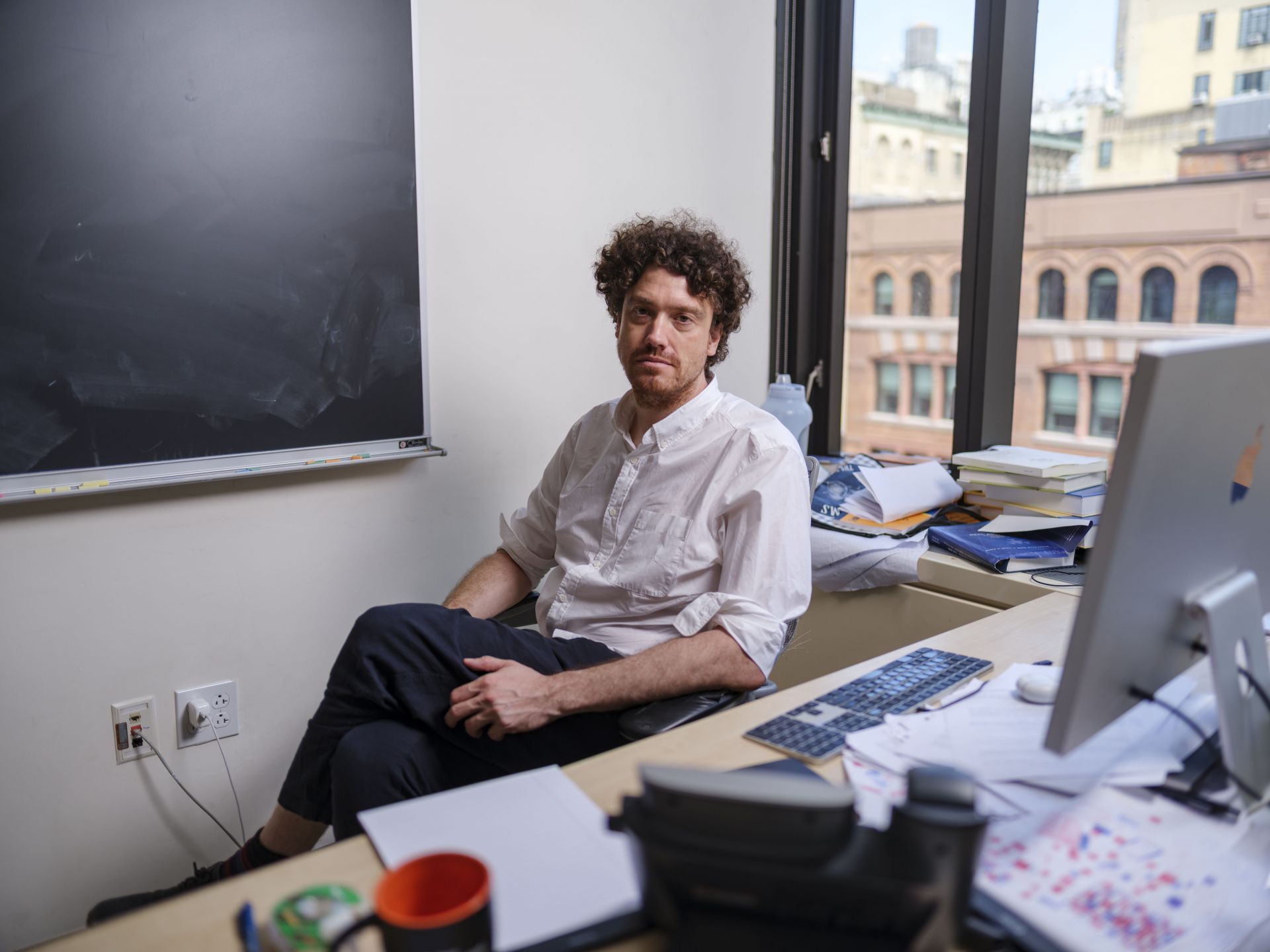
However, OpenAI's solution to the Navier-Stokes equation landed in controversy when NYU mathematician and professor Tristan Buckmaster claimed that OpenAI couldn't have cracked the problem without using the work that he and his collaborator Levent Alpöge had already done. They recently made significant progress on this equation. They had used OpenAI to help them with their work. However, they feel that OpenAI has accessed their internal data. OpenAI has denied this and offered to share credit with Buckmaster only if he reportedly offers to abandon his collaborator, who works at a rival AI company, Anthropic. Buckmaster refused to accept the offer. In an interview with MS Now, Buckmaster said,
"(AI) has a chilling effect on mathematics and scientific research"
He adds that AI can have a look at the researcher's notes and front-run them, which, he claims,
"Destroys the whole incentive system for science and mathematics."
NYU professor Tristan Buckmaster on AI affecting research

In an interview with MS Now, NYU professor Tristan Buckmaster opens up about the effects of AI on mathematics and science. According to The Washington Post, OpenAI released solutions for more than 300 open problems on October 6, 2026, a month after they found proof of the Navier-Stokes equations. In an interview with MSNow, Buckmaster said that releasing the solutions for complex math problems has affected research tremendously. He said that he personally knew three researchers whose research is now in jeopardy. He said,
"It's gonna affect the bright youngest minds coming forward."
According to Buckmaster, AI, reportedly bragging about killing mathematics, seems to be attempting an impossible task. For every solution solved, ten new problems will arise. AI has a chilling effect on mathematics and scientific research, and it is capable of destroying the whole incentive system.
Buckmaster said,
"Honestly, I don't know what they are trying to achieve. They are destroying early career mathematicians."
When the host asked Buckmaster whether OpenAI's releasing his research and solving the Navier-Stokes problem had landed him in financial loss, he said,
"I don't care about solving the Navier-Stokes problem. We solved one step below, which is the Euler problem, it's the same equation you just remove the viscosity. For me, that's a massive career achievement. All I wanted to do is sort of be in the story; I never really wanted to solve it. For me, I am fine. It doesn't affect me."
 Trending
Buckmaster said that he is worried about his PhD students, the future of mathematics and science, and the future of humanity. He stated that AI is going to affect everyone, not just mathematics and science.
Follow SoapCentral for more such updates.

Love movies? Try our Box Office Game and Movie Grid Game to test your film knowledge and have some fun!



 Reply
Reply


