


'%20x='0'%20y='0'%20height='100%25'%20width='100%25'%20%0A%20%20%20%20%20%20%20%20%20%20xlink%3Ahref='data:image/jpg;base64,/9j/2wBDAAYEBQYFBAYGBQYHBwYIChAKCgkJChQODwwQFxQYGBcUFhYaHSUfGhsjHBYWICwgIyYnKSopGR8tMC0oMCUoKSj/2wBDAQcHBwoIChMKChMoGhYaKCgoKCgoKCgoKCgoKCgoKCgoKCgoKCgoKCgoKCgoKCgoKCgoKCgoKCgoKCgoKCgoKCj/wAARCAAGAAoDASIAAhEBAxEB/8QAFQABAQAAAAAAAAAAAAAAAAAAAAX/xAAhEAABBAEDBQAAAAAAAAAAAAABAAIDEQQFBgcVISKh0f/EABUBAQEAAAAAAAAAAAAAAAAAAAED/8QAFhEBAQEAAAAAAAAAAAAAAAAAAAFB/9oADAMBAAIRAxEAPwCDicp65005jMiQPilfG0WLHZzyQfSjx8zboMbb1TNuhfm34iJidx//2Q=='%3E%3C/image%3E%3C/svg%3E)

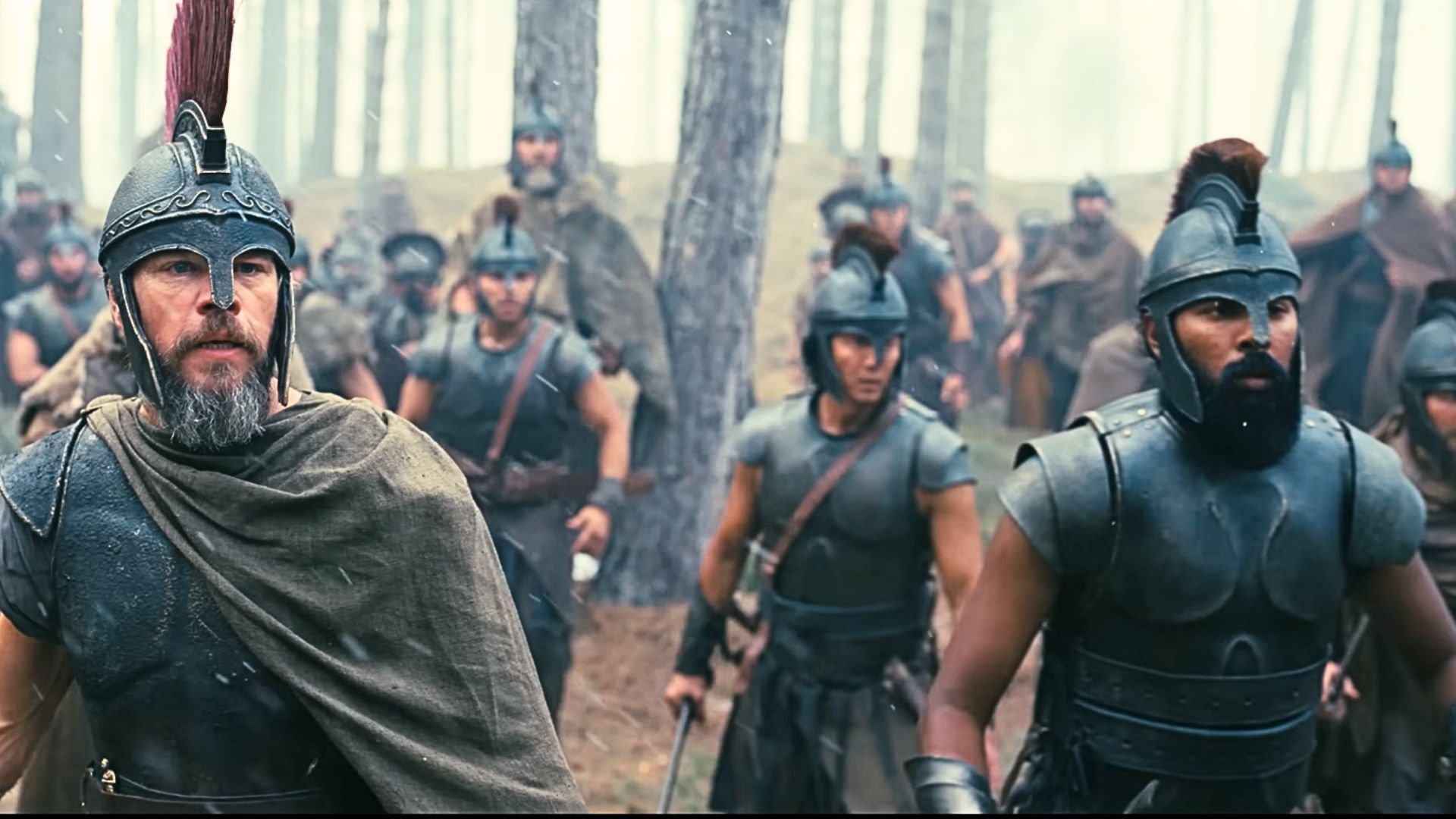
Christopher Nolan's The Odyssey brought one of Greek mythology's most enduring epics to the big screen but one legendary element remained as mysterious: the Sirens' song. In Homer's original poem, the Sirens are described as possessing a melody so irresistible that no sailor who hears it can escape its fatal pull. Despite the pivotal role the creatures play in Odysseus' journey, neither the lyrics nor the tune are ever revealed in Nolan's film. Instead, the audience is left to imagine the impossible sound that tempted countless men to their deaths.
This omission in The Odyssey is not a narrative gap but Nolan's smartest storytelling choice, as no real-world composition could convincingly live up to a song said to be universally irresistible. Since any effort to adapt it to the big screen would have limited the audience's imagination, Nolan chose to keep the Sirens' song a mystery, letting each listener envision the perfect temptation for themselves.
More on the Sirens' song in The Odyssey in our story.
The Odyssey: Who are the Sirens' and what is their haunting melody?

While there are many interpretations of the Sirens in Greek mythology, all focus on their infamous haunting song. The Sirens are half-bird & half-woman creatures who lure passing sailors with their songs to shipwreck. According to Greek mythology, the Sirens' song was so enchanting that no one who heard it was believed to survive. Captivated by their irresistible melody, sailors would abandon their ships and leap into the sea, unable to resist the urge to draw closer to the source of the haunting music.
In Homer's The Odyssey, the Sirens occupy a brief episode (compared with other monsters) but left a lasting impact on readers. Nolan's adaptation stayed true to Homer's source. While Odysseus' crew stuffed their ears with beeswax, he ordered them to tie him to the ship's mast. They were not to untie him, no matter how much he begged or cried after hearing the Sirens' song.
Curious audience, who are wondering about the Sirens' song (as it was absent in Nolan's The Odyssey), here is a translation from Homer's epic:
“Famous Odysseus, great glory of Achaea, draw near, and bring your ship to rest, and listen to our voices...We know all the suffering the Argives and the Trojans endured, by the gods’ will, on the wide plains of Troy. We know everything that comes to pass on the fertile Earth.”
Why Nolan's The Odyssey was better off without the Sirens' song

The fascination and enchanting quality of the Sirens' song has been a roadblock in previous adaptations. Filmmakers have struggled with how to adapt the Sirens' song, with many leaning towards haunting melodies and hypnotic performances to highlight the uniqueness of their voices.
However, Christopher Nolan did something different in The Odyssey. By changing the point of view to Eurylochus, Nolan shifts the focus from the Sirens' song to its consequences. Through Eurylochus, audiences see Odysseus tied to the mast, writhing in pain and almost brought to tears, which holds far more power than any actual sound. Rather than focusing on the Sirens' song, Nolan banks on its consequences, supported by Matt Damon's impressive performance as a man who wants to be freed from his restraints and cave in to the temptation.
As clear from the final line in the Sirens' song, the creatures promise knowledge. This is powerful because throughout the film, Odysseus has shown a thirst for wisdom and is naturally tempted by the song.
Once their boat passes through this obstacle, this is how Odysseus described the Sirens' song to his crew and to the audience:
''It was the delicious itch you go to scratch but find it’s under the skin, you can't reach it. So the delicious itch becomes unbearable. Told you what you most want is what you most can't have. And what you most can’t have is what you already had…and lost…. It was the song of all promises I failed to keep. And it told me I don't really want to go home.''
This is where the Sirens' song gets meta in The Odyssey, as, like Odysseus' crew, audience is tempted to listen. Nolan banks on the idea that temptation and curiosity are universal and the absence of the Sirens' song makes us long for it, which was the whole point of the sequence.
Nolan further diverged from Homer's epic by having one of Odysseus' men remove the beeswax and surrender, following which he jumped into the water and sailed towards the Sirens' promise of wisdom and knowledge.
 Trending
In preserving one of the epic's oldest mysteries, Nolan stays true to the spirit of Homer's tale, proving that what remains unheard can often be more powerful than anything shown on screen.
For the latest scoops on your favorite TV shows and movies, follow SoapCentral.

Love movies? Try our Box Office Game and Movie Grid Game to test your film knowledge and have some fun!



 Reply
Reply


