


'%20x='0'%20y='0'%20height='100%25'%20width='100%25'%20%0A%20%20%20%20%20%20%20%20%20%20xlink%3Ahref='data:image/jpg;base64,/9j/2wBDAAYEBQYFBAYGBQYHBwYIChAKCgkJChQODwwQFxQYGBcUFhYaHSUfGhsjHBYWICwgIyYnKSopGR8tMC0oMCUoKSj/2wBDAQcHBwoIChMKChMoGhYaKCgoKCgoKCgoKCgoKCgoKCgoKCgoKCgoKCgoKCgoKCgoKCgoKCgoKCgoKCgoKCgoKCj/wAARCAAGAAoDASIAAhEBAxEB/8QAFgABAQEAAAAAAAAAAAAAAAAAAAYH/8QAHRAAAgICAwEAAAAAAAAAAAAAAQIAAwQRBRIxYf/EABUBAQEAAAAAAAAAAAAAAAAAAAME/8QAGREAAgMBAAAAAAAAAAAAAAAAABEBAiEx/9oADAMBAAIRAxEAPwDC+M5mhMaujIxewAYl1Oj8GvDJ98py7HrWNnwLERUpJa70/9k='%3E%3C/image%3E%3C/svg%3E)

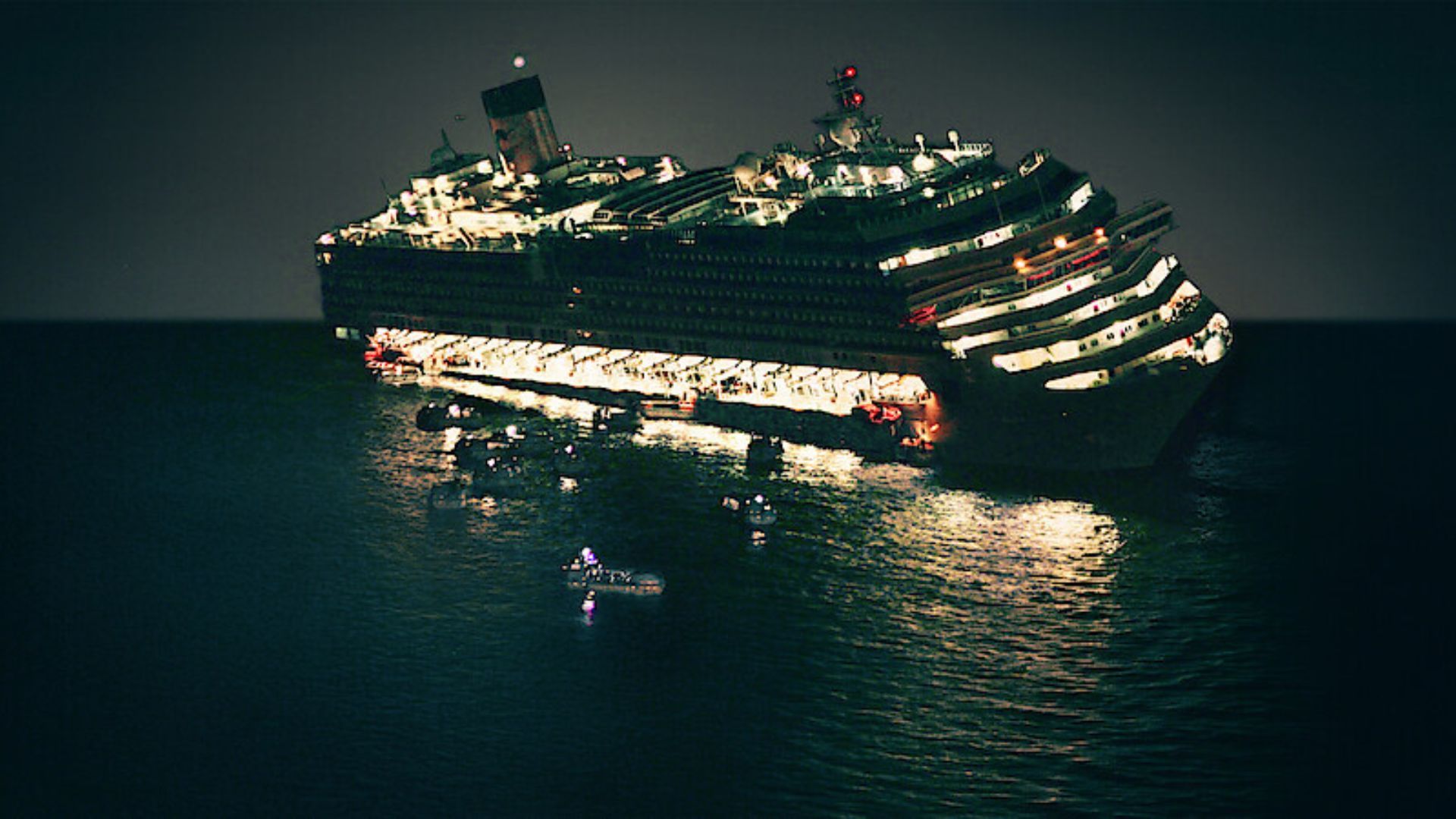
Netflix has released Shipwrecked: Nightmare at Sea, the latest documentary film that has brought renewed attention to one of the most devastating cruise ship disasters of the 21st century. It goes back to 2012 when the Italian cruise ship Costa Concordia sank.
This means that Shipwrecked: Nightmare at Sea is fully based on a true story and offers survivor interviews, never-before-seen footage (including passenger cell phone videos), translations of the ship’s black box recordings and more archival material to retell the events.
The documentary film reveals how a routine Mediterranean voyage unexpectedly turned into a life-threatening emergency and claimed 32 lives. It not only shows the fear and confusion but also sheds light on the decisions made before and after the collision.
Reportedly, there was a delayed evacuation that left thousands in danger and the questions of responsibility that followed. The documentary films also talk about the legal proceedings and why the captain became the central figure in the case and how the cruise operator responded in the aftermath.
Complete details below!
Shipwrecked: Nightmare at Sea reveals how a luxury cruise turned into a deadly maritime disaster

As revealed in Netflix's Shipwrecked: Nightmare at Sea, it was on January 13, 2012 when the Costa Concordia set sail from Civitavecchia, Italy. It was expected to be a relaxing Mediterranean cruise with more than 4,200 people on board, including passengers and crew.
Little did anyone know that the voyage took a disastrous turn after Captain Francesco Schettino chose to steer the ship away from its planned course to perform a close "sail-by salute" near Giglio Island.
However, sailing so close to the island proved extremely dangerous. The ship hit underwater rocks, which ripped a large hole in its side. Water quickly began pouring into the ship through the damaged area. As more water entered, some parts of the ship lost electricity, flooding spread, and the vessel started leaning to one side.
Even though the situation was becoming serious, the passengers weren't informed immediately. According to reports, the first announcements described the incident as only a technical problem instead of a major emergency. Because of this, a full evacuation was delayed for more than an hour.
Shipwrecked: Nightmare at Sea reveals that when the crew finally began launching the lifeboats, the ship had already tilted so much that evacuation became really hard. Passengers panic as thousands of them are trying to escape and reaching the lifeboat isn't easy.
People who survived later explained the fear they experienced. They shared that children were crying in fear and elderly passengers were being pushed as people tried to get out. Not only this, but some passengers became so desperate that they jumped into the sea to escape the sinking ship.
Although emergency services and local rescuers managed to save most of the people on board, the disaster still resulted in the deaths of 32 people. This way, the tragedy ended up being one of the deadliest cruise ship accidents in modern history.
A look into leadership failures and corporate accountability in Shipwrecked: Nightmare at Sea
As seen in Netflix's Shipwrecked: Nightmare at Sea, the Costa Concordia disaster remained under public scrutiny even after the rescue efforts ended. Many questioned how the emergency was handled and much of the criticism focused on Captain Francesco Schettino.
He was accused of leaving the ship before all passengers and crew had been evacuated, which was seen as something a captain shouldn't do. Schettino later claimed he had accidentally ended up in a lifeboat, but the explanation was widely challenged.
Investigators also reviewed the ship's black box recordings, while audio of the Italian Coast Guard repeatedly instructing him to return to the vessel further fueled public criticism. Shipwrecked: Nightmare at Sea revealed that Schettino was convicted on multiple charges, including manslaughter, and sentenced to 16 years in prison.
Other crew members were also guilty, but they received lighter penalties. Costa Cruises paid fines and compensation, but the company did not face a full criminal trial which became another reason for debate over corporate accountability.
 Trending
Also Read: If Wishes Could Kill: Is the Girigo app real? The truth behind it explained
Continue exploring SoapCentral for regular updates on TV shows.

Love movies? Try our Box Office Game and Movie Grid Game to test your film knowledge and have some fun!



 Reply
Reply


