


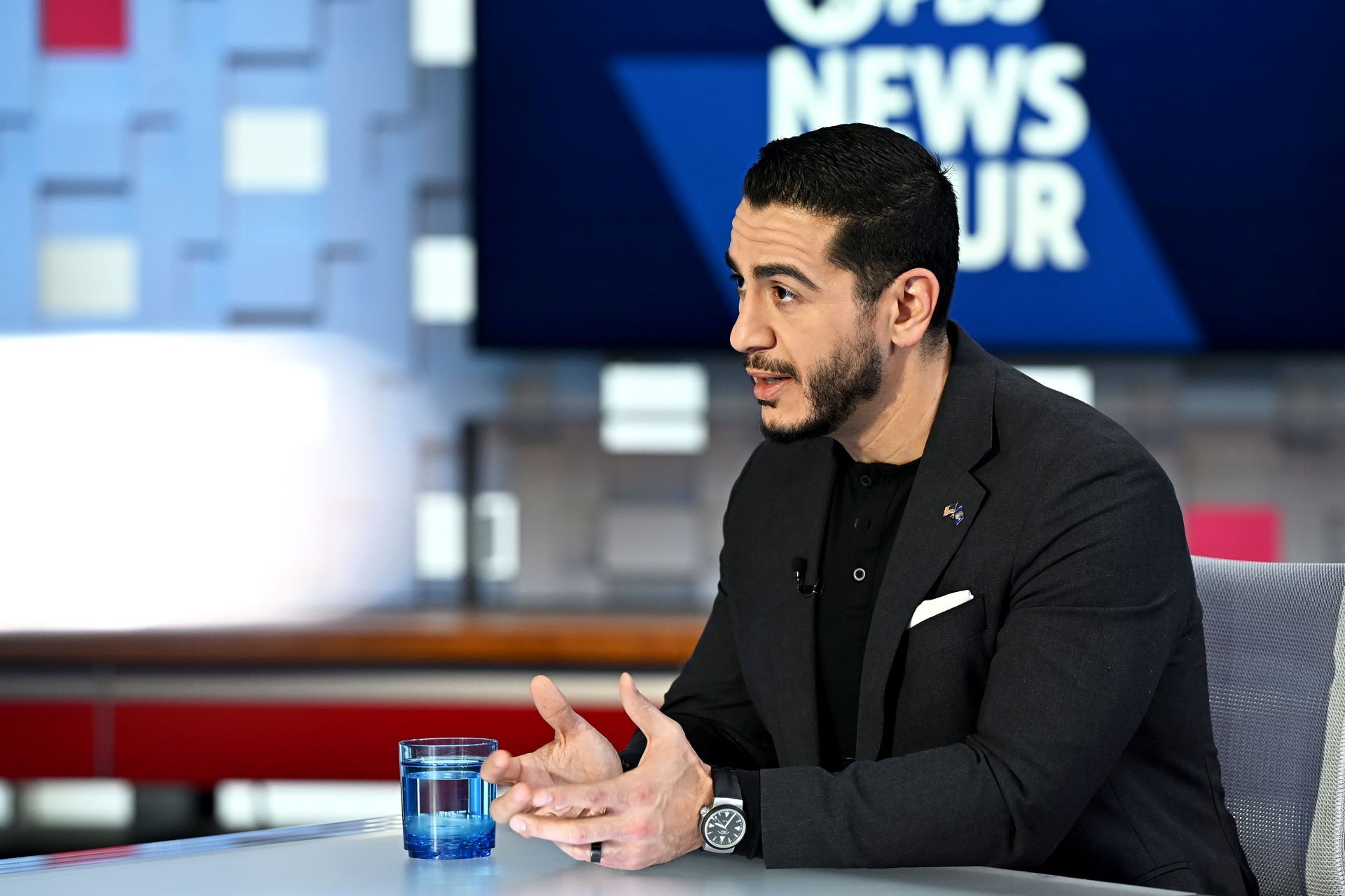


Michigan senator-elect Abdul El-Sayed spent the past year as one of Donald Trump’s most persistent critics. In an interview with The Guardian published on November 20, 2026, he said that the two of them agree on one major policy: ending unconditional US military aid to Israel, Egypt, Saudi Arabia and Pakistan.
He said:
“I agree with the president, I can’t believe I’m saying that, that we need to end foreign military aid that is unconditional to Israel, as well as Egypt and Saudi Arabia and Pakistan.”
However, the two men got there from very different places. Trump spent the campaign attacking El-Sayed by name, and Vice President JD Vance, who will swear him in on January 3, 2027, said he thinks there's something terribly amiss with Abdul El-Sayed.
What El-Sayed said about ending military aid to Israel and Trump's stance on the matter
El-Sayed's statement did not stop at the money. He added:
“I think we need to be applying very basic international law to what Israel is and has been doing. We should not continue to be running cover for them at the UN, at the ICC, at the ICJ.”
He also stated that he wants Congress to change its posture, beginning with making sure the Democratic caucus is no longer funded by AIPAC, the pro-Israel lobby that spent heavily against him. Thus, he is treating a single point of agreement with Trump as a starting point rather than a destination.
The opening came from the president. In a phone interview with Fox News around the time voting began on November 3, 2026, Trump said that the US would cut off nearly $4 billion in annual military aid to Israel at the end of the year, describing it as an arrangement he had reached with Prime Minister Benjamin Netanyahu. He said:
“We give them $4 billion of things and money, and they don’t need it.”
Trump also named El-Sayed in his reasoning, asking why the country should suffer accusations from people like El-Sayed when Israel doesn't need the funding. Whether the cutoff can happen that quickly is unresolved. A 2016 memorandum of understanding commits roughly $3.8 billion a year through fiscal 2028, and Congress approves the money annually. Josh Paul, a former State Department official who resigned over the aid in 2023, told The Intercept:
“It’s not plausible there will be a total cut-off starting January 1.”
Paul said Trump may have had the next 10-year agreement in mind, describing his remarks as “at best inaccurate or imprecise.”
El-Sayed has also lined up a meeting with Vance. He would not share the agenda, and the two sides describe the contact differently: El-Sayed said Vance’s office reached out after his victory, while Vance’s office said it called after learning the senator-elect wanted time with him, the Associated Press reported. No date has been set.
Vance sounded a different note in a Fox News interview on November 16, as he said:
“If Abdul El-Sayed wants to work with me and the president to make people’s lives better, he’s going to find us very much a willing partner.”
El-Sayed answered on MS NOW:
“If he wants to work with us to get money out of politics, put money in pockets and pass Medicare for All, which is what I ran on, I’m a willing partner.”
Thus, the meeting will test whether the overlap on Israel aid stretches to anything else. El-Sayed’s stated priorities include stopping what he called the “nuclear bomb” of Medicaid cuts, ending the war in Iran, reworking tariffs, and passing Medicare for All, which the administration has firmly rejected.
It remains to be seen whether the cutoff survives Congress, or whether the Vance meeting produces more than a handshake. Stay tuned for more updates.
 Trending
For more articles like this, follow Soapcentral.

Love movies? Try our Box Office Game and Movie Grid Game to test your film knowledge and have some fun!



 Reply


