


'%20x='0'%20y='0'%20height='100%25'%20width='100%25'%20%0A%20%20%20%20%20%20%20%20%20%20xlink%3Ahref='data:image/jpg;base64,/9j/2wBDAAYEBQYFBAYGBQYHBwYIChAKCgkJChQODwwQFxQYGBcUFhYaHSUfGhsjHBYWICwgIyYnKSopGR8tMC0oMCUoKSj/2wBDAQcHBwoIChMKChMoGhYaKCgoKCgoKCgoKCgoKCgoKCgoKCgoKCgoKCgoKCgoKCgoKCgoKCgoKCgoKCgoKCgoKCj/wAARCAAGAAoDASIAAhEBAxEB/8QAFgABAQEAAAAAAAAAAAAAAAAAAAUI/8QAHhAAAgEEAwEAAAAAAAAAAAAAAQIAAwQRMQUhIqH/xAAVAQEBAAAAAAAAAAAAAAAAAAABAv/EABYRAQEBAAAAAAAAAAAAAAAAAAABMf/aAAwDAQACEQMRAD8AzpwtBby7a3cIKYplj5z3oH7JDOysRnRxERmIf//Z'%3E%3C/image%3E%3C/svg%3E)

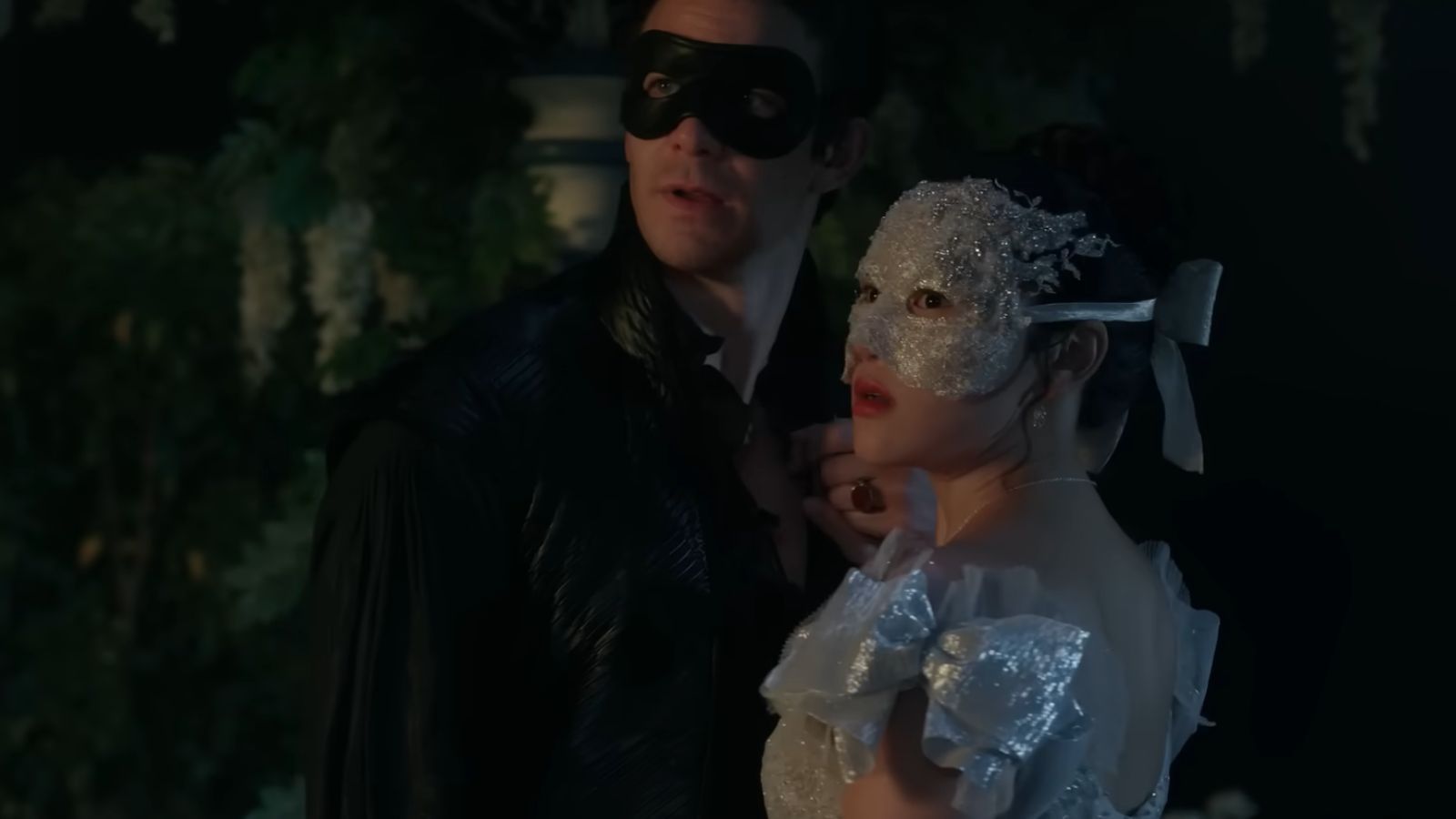
Bridgerton Season 4 is very reminiscent of an iconic fairy tale that fans have grown up loving. We're talking of course, about Cinderella; the fairytale that dared us to dream of Prince Charmings, of wonderful balls and the magic of one magical evening that changes your life. The season frames Sophie Baek’s arc as a Cinderella moment, a masked ball, a vanished guest, a social gulf between lovers, but the show makes deliberate changes to the story’s stakes, context, and consequences.
The adaptation borrows the spectacle and romance of Cinderella but there are some differences that separate the two too. Here are five similarities between the Netflix show and the classic Cinderella story, and five ways in which it's actually very different.
Similarities between Cinderella and Bridgerton Season 4

A meet-cute at the ball
Both the stories' romance starts at a ball. In Bridgerton Season 4 it's Sophie who finds herself at the ball and Benedict Bridgerton is charmed towards her as they spend much of the evening together, talking about things outside the fancy chandeliers and the ball.
It is very much similar to how Cinderella meets her Prince Charming, as he lays eyes on her at the ball, and because of a little magic from her fairy godmother, her stepmother doesn't recognize her.
It's a classic meet-cute, and an iconic one. The Bridgerton's version of it is classy, modern and adds some fresh twists, and is pure nostalgia for fans who grew up falling in love with Cinderella's story.
The real story behind the masks and magic
Both the women have cruel, struggling lives behind the fancy ball. Sophie is a maid working for Lady Penwood, who is treated horribly by her. Cinderella too, is mistreated by her stepmother and stepsisters, is subjected to violence and humiliation.
It's the sharp contrast to the magical night in both the stories, and one of the ways it builds the protagonist's arc beautifully.
The presence of the cruel guardian

The stepmother is the central antagonist in both stories. On one hand, Lady Penwood controls and suppresses Sophie, on the other hand, Cinderella's stepmother does the same after her father's death.
This dynamic reinforces the fairy tale’s core tension between inherited power and earned worth. The guardian figure exists to remind the heroine that survival requires obedience. Bridgerton deepens this trope by tying Araminta’s cruelty to social reinforcement, but the emotional function remains the same: She is the obstacle that love alone cannot remove.
Both the characters are disinterested in love at first
Both Cinderella and Sophie go to the ball in search of an evening of joy and freedom. None of them are looking for love. They don't chase romance. What they chase is dignity, happiness and freedom. Luckily, it just happens to be right where they find themselves at.
Yearning...a lot of yearning
Similarities are not just in the female lead, but also in the two men. Benedict holds on to the glove Sophie left and looks for her everywhere, yearning for her. Same goes for Prince Charming as he holds on to her slipper and chases her across the kingdom, looking for the one who it fits.
Differences between Cinderella and Bridgerton Season 4

No fairy godmother, no magic
Unlike Cinderella, Bridgerton removes magic entirely from Sophie’s story which obviously makes sense, considering it's a practical show. There is no fairy godmother, no supernatural intervention, and no safety net when things go wrong, which means that every choice Sophie makes carries real consequences.
Attending the masquerade is a risk and when the night ends, nothing protects her from punishment or exposure. This absence of magic grounds the story in realism and forces Sophie to rely on instinct and restraint rather than hope.
The Lady in Silver and Sophie are two different women
In Cinderella, the prince never truly separates the servant girl from the woman at the ball but Bridgerton makes that divide central to the narrative. Benedict believes the Lady in Silver and Sophie are two entirely different people, which reveals his own blind spots about class.
It also gives Benedict more space to spend time with Sophie and get to know her more and ultimately make the decision of whether to hold on to the one night or accept the person in front of him who is real.
Sophie is banished, not confined

After the stepmother gets to know the Prince is looking for Cinderella, she is confined inside the house, her freedom taken away so the Prince does not know about her identity.
This has a stark contrast with the storyline in Bridgerton Season 4, where Sophie is fired from the house after Lady Penwood gets to know about her identity as the Lady in Silver.
Sophie has a far different backstory
Sophie's backstory is far more tragic. As the daughter of a maid who had an affair with Lord Penwood, she is stripped of any security, and is outside any legal and social protection. When he dies, she is left with nothing and is forced to work as a maid for Lady Penwood just to have security.
On the other hand, Cinderella is oppressed within the family but remains legitimate. Sophie is erased by law and class, making her vulnerability systemic rather than personal.
Sophie’s inferiority is rooted in class, not self doubt
Cinderella’s suffering is usually emotional and familial, but Sophie’s is structural. Her sense of inferiority is shaped by class hierarchy, illegitimacy, and labor exploitation. She understands exactly where she stands in society and why love cannot protect her.
On the other hand, Cinderella's story doesn't exactly explore any difference in their class or the reason for the violence she endures, rooting from her identity as someone who has a smaller position in society.
 Trending
Bridgerton Season 4 is now streaming on Netflix.


 Reply
Reply


