


'%20x='0'%20y='0'%20height='100%25'%20width='100%25'%20%0A%20%20%20%20%20%20%20%20%20%20xlink%3Ahref='data:image/jpg;base64,/9j/2wBDAAYEBQYFBAYGBQYHBwYIChAKCgkJChQODwwQFxQYGBcUFhYaHSUfGhsjHBYWICwgIyYnKSopGR8tMC0oMCUoKSj/2wBDAQcHBwoIChMKChMoGhYaKCgoKCgoKCgoKCgoKCgoKCgoKCgoKCgoKCgoKCgoKCgoKCgoKCgoKCgoKCgoKCgoKCj/wAARCAAGAAoDASIAAhEBAxEB/8QAFgABAQEAAAAAAAAAAAAAAAAAAAQH/8QAIBAAAgEDBAMAAAAAAAAAAAAAAQIDABESBAUhMRNRcf/EABQBAQAAAAAAAAAAAAAAAAAAAAT/xAAYEQEAAwEAAAAAAAAAAAAAAAABAAMREv/aAAwDAQACEQMRAD8AwbWbnI0Ur5tnHZVGIAtjbu/vriqoN2lSCNWV2IUAny98fKUo6GRlB0uz/9k='%3E%3C/image%3E%3C/svg%3E)

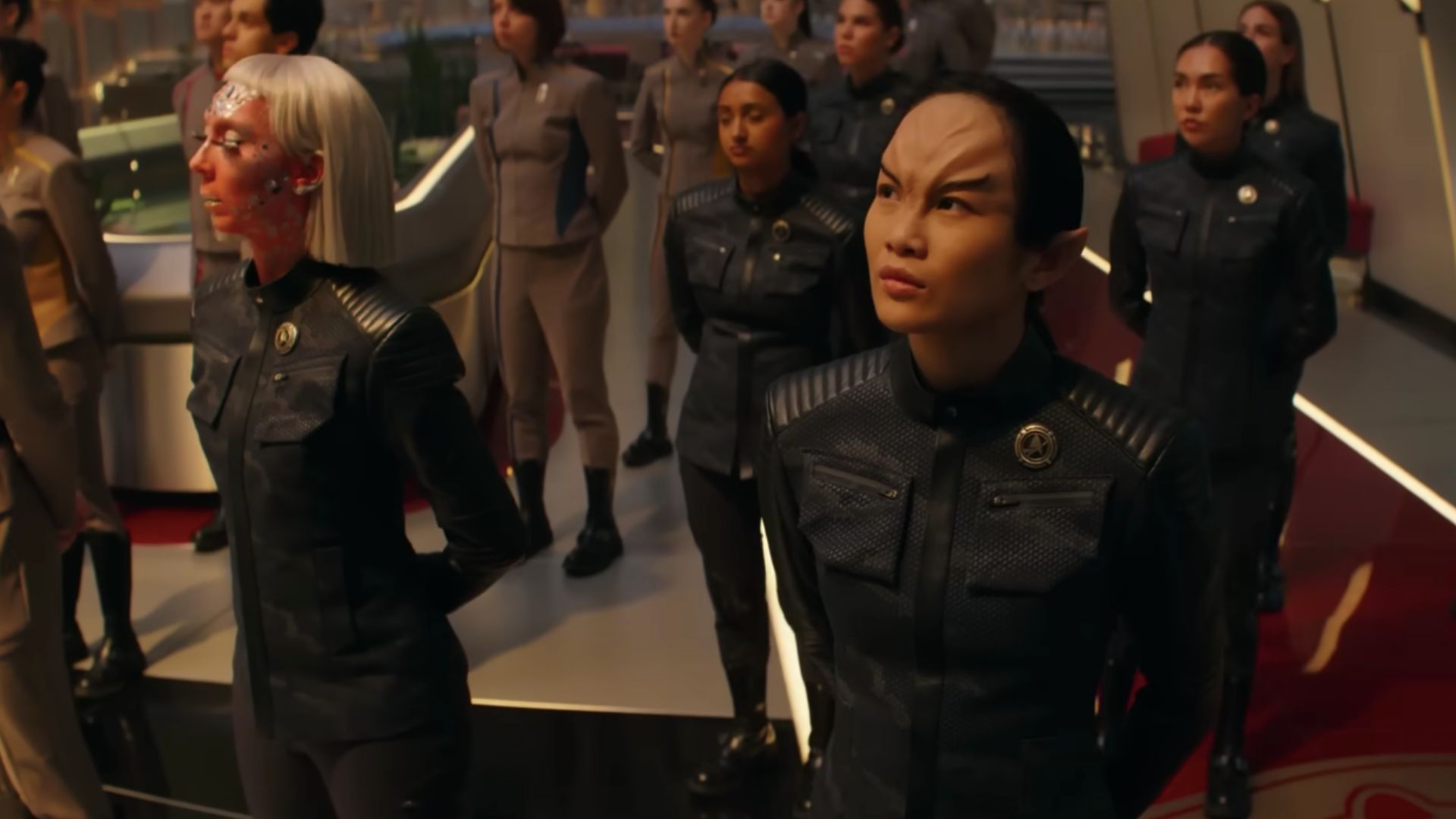
Philip Lanyon, the cinematographer of Star Trek: Starfleet Academy, talks in detail about the visual language of the newly released series. In an interview published by MotionPictures.org, Lanyon mentioned how the conscious visual choices were made in order to strike a balance between old fandom members and the new ones.
Belonging to the Star Trek universe, this Paramount+ series is set in a post-Burn galaxy. In an academic setting, we witness the journey of newbie cadets who, in the process of transitioning into officers, experience love, camaraderie, and conflicts.
Keep reading to find out what Philip Lanyon revealed about the visual design of Star Trek: Starfleet Academy.
A breakdown of the visual language of Star Trek: Starfleet Academy, according to DP Philip Lanyon
Star Trek: Starfleet Academy is different from the rest of the series in the franchise. This show is set in an academic setting that explores the rite of passage of a group of youngsters. So undoubtedly, elements of youthful spirit, selfhood, and evolution ought to be the core of the series. So, the makers had to find a way that did not compromise these features, but also was rooted in the Star Trek world.
In the interview, Philip Lanyon mentions that the visual style of the series reflects that choice. He talks about certain technical modifications that were done by the makers, as he says:
"On its face, it’s for a younger audience. The very down-to-earth, technical changes we made were that we went to a 16:9 [aspect ratio] to fill the TV. We felt that was a little more approachable for all audiences, compared to the 2.40 widescreen format we used for Discovery, Strange New World, Picard, and Section 31. That was the big visual change, [and then] a little less anamorphic feel, a little bit less flare, although we feel like that’s a part of the common collective consciousness of what Star Trek is, visually, so we definitely had that in there."
Evidently, the judgment to go for a 16:9 ratio has to be one of the distinct stylistic choices in its making. Rather than the visual decisions made for the earlier Star Trek installments, this one felt to be resonating with what the new series is intending to explore.
Keeping in mind its audience, Lanyon expresses how this felt to be more congenial and instantaneous, something that resonates with the young crowd. Also, a feeling of totality and absorption is felt in its visuals. This brings a sense of emotional proximity with the characters of Star Trek: Starfleet Academy.
Concurrently, the aesthetics of Star Trek have also been infused seamlessly. One of the key aspects of its visual design, the Lens Flares, has been used at times in the show when they felt it was required. This gentle acknowledgment helps the series to remain loyal to the history of the franchise as well as the sentiments of the old Star Warriors.
The intended use of light also plays a key role in its visual storytelling. In order to showcase the intergenerational difference between characters, the conscious use of lighting depicts the distinction. The lighting for the veteran ones was rather more controlled. As opposed to them, the younger ones were brightly lit as they represented sanguinity in Star Trek: Starfleet Academy.
Interestingly, Philip Lanyon also talked particularly about a flashback scene involving Jay-Den in one episode. He mentioned that there was no digital tool used in that scene, as it was filmed on 16mm film. This choice worked immensely well for the series, as it struck the right emotions with its grainy texture and warmer hue.
Alongside this, the camera work perfectly matched the show’s atmosphere. Its grounded and realistic movement makes the audience feel as though they are moving through the academy alongside the characters, adding another layer to the immersive experience Star Trek: Starfleet Academy aims to create.
 Trending
Stay tuned for more such stories at Soap Central!
Also read: When is Star Trek: Starfleet Academy set?




 Reply
Reply


