


'%20x='0'%20y='0'%20height='100%25'%20width='100%25'%20%0A%20%20%20%20%20%20%20%20%20%20xlink%3Ahref='data:image/jpg;base64,/9j/2wBDAAYEBQYFBAYGBQYHBwYIChAKCgkJChQODwwQFxQYGBcUFhYaHSUfGhsjHBYWICwgIyYnKSopGR8tMC0oMCUoKSj/2wBDAQcHBwoIChMKChMoGhYaKCgoKCgoKCgoKCgoKCgoKCgoKCgoKCgoKCgoKCgoKCgoKCgoKCgoKCgoKCgoKCgoKCj/wAARCAAGAAoDASIAAhEBAxEB/8QAFQABAQAAAAAAAAAAAAAAAAAAAAf/xAAgEAACAgIBBQEAAAAAAAAAAAABAgMRAAUGBBITISJB/8QAFQEBAQAAAAAAAAAAAAAAAAAABAX/xAAcEQACAgIDAAAAAAAAAAAAAAABAgADBFEREkH/2gAMAwEAAhEDEQA/AJNxDR6XY8Y2b9fHONnHB54GjUGMK1KoNm77jZr8yfSTwpIytB9KSDR9YxgKOWdwdypknrWhHo1P/9k='%3E%3C/image%3E%3C/svg%3E)

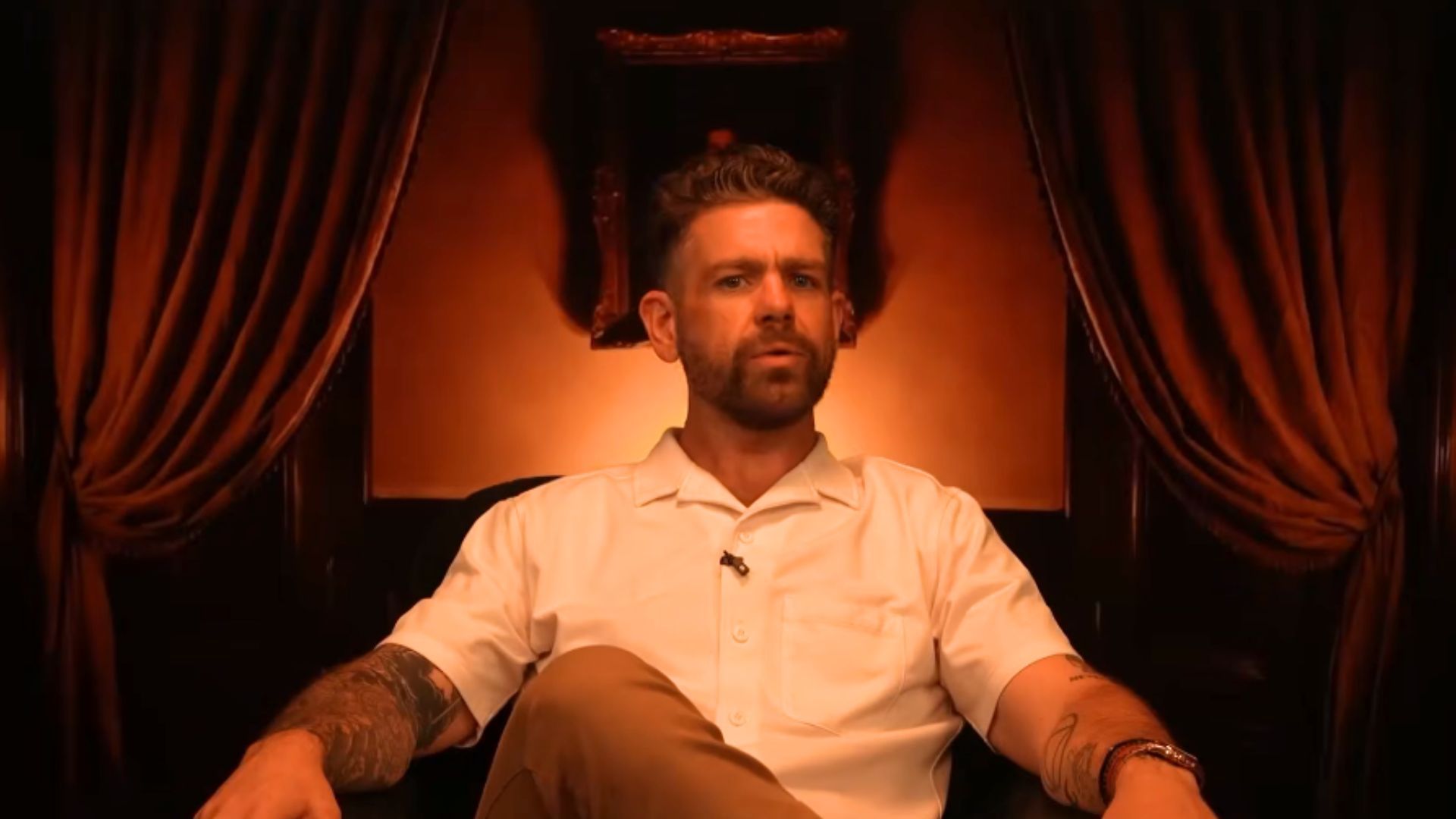
The episode of the podcast Jack Osbourne's The Most Haunted titled The Clown Motel: America's Scariest Motel revisits Jack's investigation of the Clown Motel situated in Tonopah, Nevada. According to Jack, the place is called America's scariest motel despite its surprisingly wholesome origin.
Guests who came to the place have reported disturbing incidents like hearing voices and footsteps, seeing shadow figures, noticing moving objects, and even feeling touched by a phantom while asleep. Jack revealed the guests might be unaware of the marketing strategies applied by The Clown Motel to draw them towards the motel. So, he began the episode by starting with the story of a miner and a dedicated clown collector named Clarence David, whose children built the motel beside his grave.
Jack questioned whether Clarence could still be connected to the clowns, whether something came with the thousands of clown donations collected through time, or whether years of fear and expectations created a presence of their own.
Continue reading more about the story.
Guests claimed that they witnessed paranormal activities in the Clown Motel

In the episode The Clown Motel: America's Scariest Motel, the host explained that the roadside motel was filled with thousands of clowns. He mentioned clown dolls, clown paintings, clown statues, and even clown puppets.
Jack also shared that a cemetery was present right beside the motel, which made the place even more disturbing. The host explained that he had been there before and walked inside the motel as well as through the cemetery. He had even stood at the grave of the man whose clown collection began all these scary rumors.
Jack explained that visitors reported voices coming from empty rooms, footsteps, knocking, and objects that disappeared. Some claimed that they saw shadow figures, while others saw moving clowns. He also mentioned the most unsettling stories related to the guests, who were being touched by some unseen force during the night.
The strangest part about America's scariest motel is that it was never meant to be frightening, but it became a place of fear among those who visited there. According to Jack, a study revealed that more than half of adults are afraid of clowns, and he was one of them.
The Clown Motel: Who was Clarence David?

The Clown Motel revealed that Tonopah was built on silver, and at the start of the 20th century, prospectors came to the Nevada desert to develop a mining town. Jack said that there was a Tonopah Cemetery beside the motel, opened in 1901, and used for about a decade.
Inside the cemetery, there were miners, victims of disease, townspeople, and people who died in accidents and mining disasters. One of those graves belongs to a man named Clarence David, who worked as a miner and loved clowns with an unusual obsession.
The Clown Motel showed that Clarence collected clowns and artwork and then died. There was a strange difference in the published history about what caused his death or when it happened. The motel's own history had a later date, while cemetery records revealed that Clarence was killed in the Belmont Mine fire on February 23, 1911.
In 1985, Clarence’s children, Leona and Leroy, opened a motel right beside the cemetery where their father was buried. Inside the Clown Motel, they displayed about 150 clowns from their father’s collection.
The Clown Motel: Jack Osbourne debunked the theory that clowns were scary
In The Clown Motel episode, Jack said that clowns have always had a darker side. Historically, they were tricksters and were allowed to misbehave and hide their real faces, as well as break rules. But by the middle of the 20th century in America, clowns had become domesticated. Bozo, Ronald McDonald, birthday parties, circuses, and television made clowns look friendly. For generations, clowns were sold to American children as something safe and cheerful.
The host also mentioned John Wayne Gacy, who murdered 33 young men and boys during the 1970s. When Gacy was arrested in 1978, people discovered that he sometimes performed at community events as a clown named Pogo. Gacy didn't do any clown makeup while committing his murders, but over time the killer clown story became closely tied to his crimes.
The horror industry carried that image forward. In 1986, Stephen King published It, and Pennywise turned a character meant to entertain children into something waiting in a sewer. The 1990 television adaptation brought Tim Curry’s Pennywise into people’s homes, and the 2017 film introduced Pennywise to a new generation. By then, the scary clown had become an archetype.
In the episode The Clown Motel, Jack said that the fictional character, Art the Clown, took the idea of a clown to the extreme. He didn't talk, just smiled and moved like an old‑style clown. However, he killed people in terrible ways instead of making balloons.
This proved how society changed the image of clowns. A figure once meant to make people laugh had become something people fear. That is why Clarence is so interesting. He died before Gacy, Pennywise, and even before Art. He didn’t collect clowns because they were scary. He collected them because he truly loved them.
How did Jack refute the theory that people inside the motel experienced paranormal activities?

Jack explained that fear inside the motel was not proof of haunting but often the result of expectations. He pointed out that when people slept in The Clown Motel, their minds didn't start from neutral because they had a picture in their mind that the motel's thin walls, noisy pipes, and a cemetery next door meant that something unusual would happen.
Jack further pointed out that the motel benefits commercially from its haunted reputation. He had emphasized that donated clowns arriving from unknown owners complicated the narrative, since attachments or histories of those objects were unclear. More importantly, he had suggested that concentrated belief and repeated fear from thousands of visitors might have shaped experiences.
In his view, people were often reacting to the motel’s reputation rather than to confirmed paranormal activity. By separating Clarence’s original collection from later donations and questioning the role of human expectation, Osbourne had debunked the idea that fear alone proved haunting at The Clown Motel.
 Trending
Follow Soap Central for more updates on TV shows.




 Reply
Reply


