


'%20x='0'%20y='0'%20height='100%25'%20width='100%25'%20%0A%20%20%20%20%20%20%20%20%20%20xlink%3Ahref='data:image/jpg;base64,/9j/2wBDAAYEBQYFBAYGBQYHBwYIChAKCgkJChQODwwQFxQYGBcUFhYaHSUfGhsjHBYWICwgIyYnKSopGR8tMC0oMCUoKSj/2wBDAQcHBwoIChMKChMoGhYaKCgoKCgoKCgoKCgoKCgoKCgoKCgoKCgoKCgoKCgoKCgoKCgoKCgoKCgoKCgoKCgoKCj/wAARCAAGAAoDASIAAhEBAxEB/8QAFgABAQEAAAAAAAAAAAAAAAAAAAQH/8QAHhAAAQQDAAMAAAAAAAAAAAAAAwABAhEEBQYTIoH/xAAVAQEBAAAAAAAAAAAAAAAAAAACBP/EABYRAQEBAAAAAAAAAAAAAAAAAAEAAv/aAAwDAQACEQMRAD8AzXS8iY+vEUuQKA5s0vS3lX1qUhONP5JVliq3q4uiJlHvSN//2Q=='%3E%3C/image%3E%3C/svg%3E)

Netflix dropped its limited series Adolescence on March 13, 2025, and right from the start, it refuses to play by the usual whodunit rules.
The setup is stark: 13-year-old Jamie Miller stands accused of killing a classmate. Soon, everyone in his orbit, his family, his therapist, and the detective on the case, rushes to figure out what really happened and why.
The show’s style matches its attitude. Adolescence unfolds over four episodes, and every single one is shot in a single, unbroken take. Netflix made a big deal out of this choice. That relentless, “no escape” camera work is not just a gimmick; it’s the whole point. Discomfort isn’t something you stumble into here; it’s in every frame.
Disclaimer: The article contains the writer's personal opinions. Reader discretion is advised.
Why Adolescence makes frustration part of the experience

I believe the most irritating aspect of Adolescence, the manner in which it denies the typical beat of satisfaction, is the most explicit declaration it makes about youth violence, responsibility, and the adult systems that insist on the control of both. Because if the show gave you what you wanted, it would be lying.
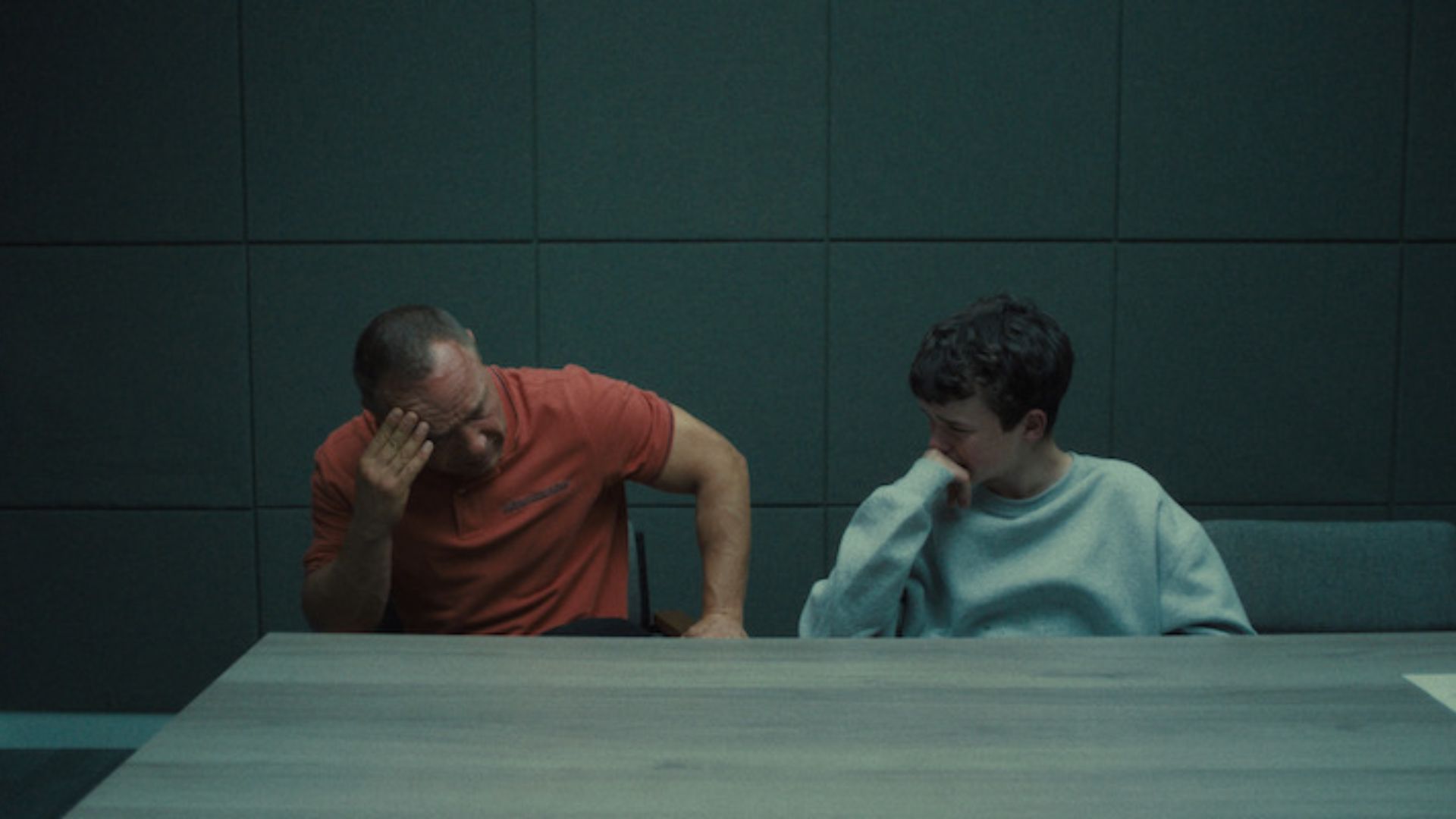
The one-shot format immerses you in the helplessness of everybody onscreen. A typical crime drama breaks off. It hops time. It takes the strain off with scene shifts, music hints, and clean-up exposition. You will not get that comfort in Adolescence, which makes every episode a prolonged present tense, a single shot that leaves you trapped in the room when you are meant to get out.
Such a technical decision is not merely flexing. It changes your role as a viewer. You do not watch events happening, but suffer. You do not have the comfort of distance. You enter the same procedural panhandling, waiting-rooms, questioning, lengthy pauses, half-responses.
And when you are impatient, when you wish somebody would simply say the thing, or when you are desperate to get a clear explanation, it is not you failing the show. That is the show that recreates how these situations really feel: lethargic, disorienting, bureaucratic, emotionally rippled.
The narrative is designed in such a way that it does not offer closure, as real life seldom offers it. The emotional calculus does not tie itself up even when the plot is later resolved to explain what happened.
Adolescence may attract people who bring in a puzzle-box: Did he do it? What’s the twist? However, it is not the ‘gotcha’ of revelation that the series is chiefly concerned with. It cares about what one incidence of violence does to a family, a school, and a community, in the long run.
That is why the narrative emphasis is placed on the aftermath: the shock, the denial, the rationalizations, the processing, the blame, the self-blame. And the exasperation of seeing adults attempt to teach a child something by using the wrong tools.
The creators themselves have discussed desiring a more subtle approach to youth violence instead of just a simplistic image of a bad family or a cartoon villain.

You are not exposed to simple villains since Adolescence is not discussing monsters, but systems. Many works of true-crime-adjacent storytelling work by isolating evil in one person. Adolescence continues pulling in the other direction: It shows how many different spaces are capable of shaping a child simultaneously: home, school, online platforms, peer groups, and even the adult institutions that react afterwards.
The show has been associated with violence among young people and how certain teens are manipulated to get dragged into unhealthy online culture, particularly misogynistic influencer culture and “manosphere” rhetoric.
The frustrating (and truthful) thing is that it does not provide you with one switch you can turn to to make everything work. And if you wish to put the blame on parenting alone, the story will not comply. In case you wish to accuse the internet per se, the story makes it harder as well. And in case you wish to have one reason, the show continues to present you with layers.
The emotional result of complexity is frustration. And complexity is the point.
Adolescence capitalizes on your desire to have certainty, then turns it on you. The way this series approaches certainty is one of the most emotionally aggressive moves on its part. Viewers want to “know.” Characters want to “know.” The detective desires a pure timeline. The therapist wants insight. The parents wish to think that there has been a dreadful misunderstanding.
And the show leaves you to experience that craving, then leaves you to sit with what it costs. Since certainty is soothing. It allows you to quit posing tougher questions:
What is ignored in a community before the crisis?
What do adults write off as mere “teenage stuff” until it is not?
What does online radicalization appear like before being a headline?
When Adolescence finally uncovers that Jamie is indeed guilty, as evidenced by CCTV footage, which is followed by the confession, there is nothing left to rejoice. It is heartache, sickness, and the hideous truth that knowing is not the same as understanding.
The missing point of view is also included in what you are supposed to feel. Criticism of Adolescence has focused both on who receives narrative space and who receives none of it, particularly in the case of the victim. And I know how uncomfortable that can be, since it is easy to feel there is a misdistribution of attention in the story.
But that omission can be interpreted equally as intentional indictment: in most actual situations, attention shifts to the offender, the pathology, the reason, the trial spectacle, at the cost of the victim being reduced to a symbol. And when you emerge from the show feeling uncomfortable about that imbalance, maybe it is compelling you to address the same cultural habit in yourself: whose inner world we hypocritically cherish when violence occurs.
That does not necessarily render the frustration of all spectators “wrong.” It makes it useful. It is a reminder: What sort of a story have I come here for, and why do I want it?

Adolescence is structured to initiate discussion, not to end them. Early reporting by The Guardian presented the series as the sort of television that was intended to spark the urgent discourse about screens, isolation, and the need to keep kids in touch with real relationships.
The editorial framing work by Netflix itself about the show also focuses on impact: Adolescence as a “talked-about” limited series, and the interviews with the cast/creators about why they made it and what they hope it triggers.
This is why the style of the show is also nearly punitive. It is designed not to make you zone out. It does not desire you to be safely amused at tragedy. It desires you to be on your guard, and perhaps a little angry, because anger is nearer to action than passive melancholy.
 Trending
The most recent evidence that it landed: awards attention, and ongoing discourse. Adolescence has definitely become part of the cultural bloodstream, whatever you may think of the experience. Most recently, it was honored in the 2026 Golden Globe Awards (airing January 11, 2026), where it snagged the Best Limited Series, and key cast members also reportedly won awards.
And that sort of awards momentum does not occur unless a show is doing something other than telling a story that the audience already knows how to watch. Adolescence is officially stressful, ethically prickly, emotionally obnoxious, and it is getting rewarded to be so.


 Reply
Reply


