


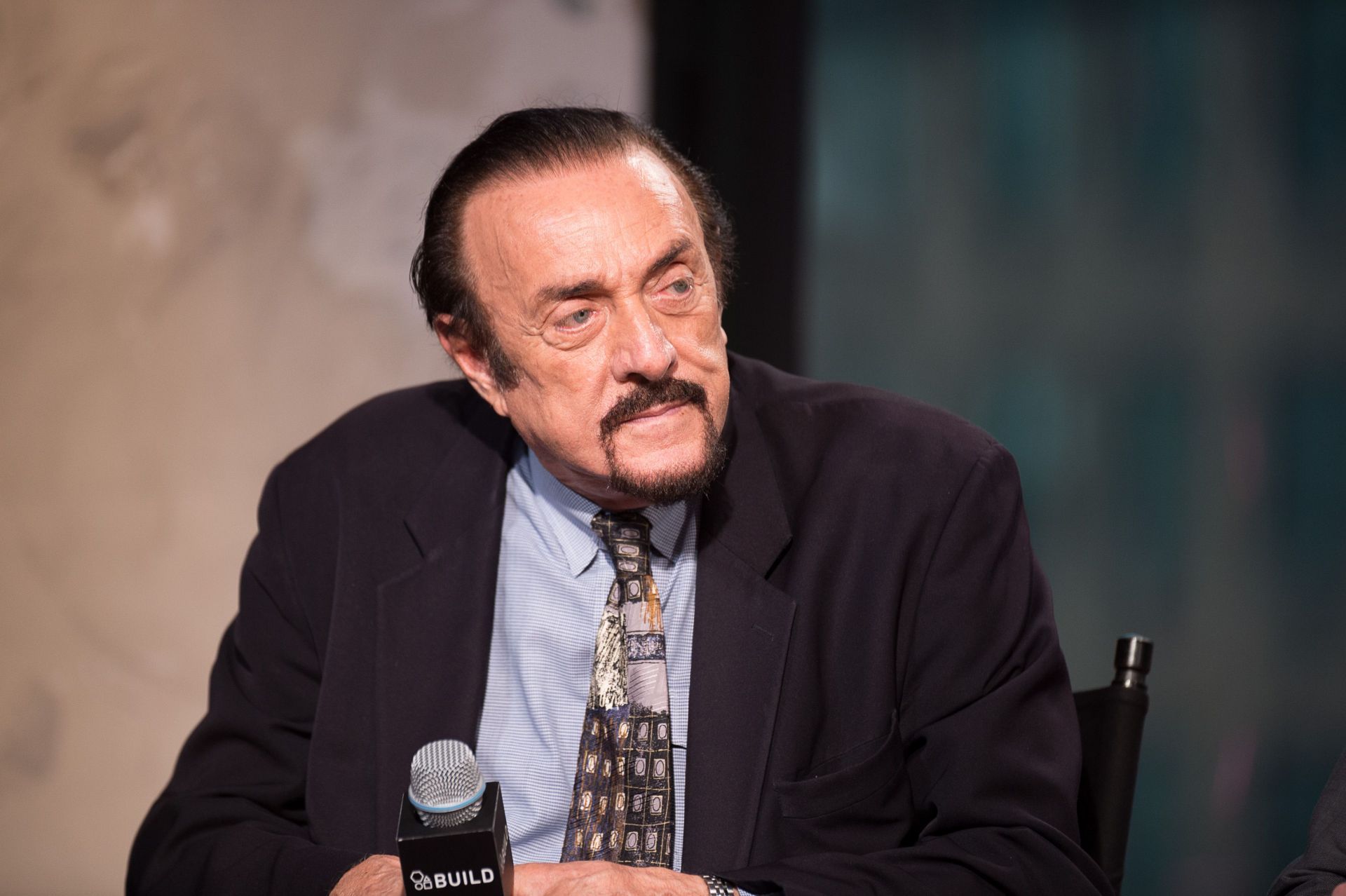


Netflix's latest controversial reality series, The New Stanford Prison Experiment, premiered on October 21, 2026. According to Netflix, this series is based on Philip Zimbardo's 1971 psychological experiment that ended on a tragic note and raised a pivotal question: Can power change people?
The Netflix series reimagined the chilling experiment as an unscripted series. In the series, 30 willing participants will enter a real prison and will be assigned as either guards or prisoners. In an interview with Tudum, executive producer Jane Lipsitz of The New Stanford Prison Experiment said,
"If we were simply recreating the original experiment, that would be unconscionable. But this is a different time, with different participants, different safeguards and, ultimately, a very different journey."
Inside The New Stanford Prison Experiment's shocking true story.
The New Stanford Prison Experiment: The true story behind Philip Zimbardo's 1971 study

According to The Cornell Daily Sun, in 1971, around 24 college students were locked in a mock prison located in the basement of the Stanford Psychology Department for an experiment on the human psyche and people's reaction to a change in power dynamics. The experiment was conducted by Professor Philip Zimbardo. According to the media outlet, the professor paid $15 per day to young college-going men to participate in the experiment.
At the start of the experiment, the participants were blindfolded and taken to the basement of Jordan Hall. A coin was flipped to determine whether a participant would act as a guard or a prisoner. There were 12 guards and 12 prisoners. According to History TV, everyone received their uniforms. While the guards wore khaki pants and shirts and carried nightsticks and whistles, the prisoners were ordered to wear loose smocks with a prisoner ID. The prisoners were also asked to wear chains around one ankle. Prisoners were locked in the cramped cells.
Prisoners were asked to call each other by their IDs and not by their names. Guards were to be addressed as Mr. Correctional Officer. Prisoners were asked to remain silent during their meals, rest period, and after lights out. They were only allotted five minutes to use the bathroom. Any breach of rules could result in punishment, where they were locked in the Hole, a closet with barely enough space to stand.
The guards were given a set of tasks to perform without instructions or formal training. The prisoners received a number and a cell. The experiment was scheduled for two weeks. However, within six days, it was called off.
Within six days, the prisoners and guards turned violent. In the mock prison experiment, every participant misused his power. There were prisoner rebellions, strip searches, and abuse. Zimbardo concluded that power could corrupt human consciousness. In the following years, Zimbardo was scrutinized for the cruel experiment. Recovered tapes suggest Zimbardo trained the guards to misuse their power and exhibit brutality toward the prisoners.
The Stanford Prison Experiment was heavily criticized. Following the experiment, there were attempted prison breaks at San Quentin Penitentiary, leading to the death of three inmates and three guards. A riot also broke out at Attica Correctional Facility in New York, where 43 people were killed. According to the Stanford Report, Zimbardo acknowledged that the experiment went out of control and turned out to be shocking and unexpected. Philip Zimbardo died on October 14, 2024, at the age of 91.
The New Stanford Prison Experiment is available to stream on Netflix.
 Trending
Follow Soapcentral for more updates on The New Stanford Prison Experiment.




 Reply


