


'%20x='0'%20y='0'%20height='100%25'%20width='100%25'%20%0A%20%20%20%20%20%20%20%20%20%20xlink%3Ahref='data:image/jpg;base64,/9j/2wBDAAYEBQYFBAYGBQYHBwYIChAKCgkJChQODwwQFxQYGBcUFhYaHSUfGhsjHBYWICwgIyYnKSopGR8tMC0oMCUoKSj/2wBDAQcHBwoIChMKChMoGhYaKCgoKCgoKCgoKCgoKCgoKCgoKCgoKCgoKCgoKCgoKCgoKCgoKCgoKCgoKCgoKCgoKCj/wAARCAAGAAoDASIAAhEBAxEB/8QAFgABAQEAAAAAAAAAAAAAAAAAAAUH/8QAIBAAAgEDBAMAAAAAAAAAAAAAAQIDAAQRBhIhMQUyUf/EABUBAQEAAAAAAAAAAAAAAAAAAAAC/8QAFREBAQAAAAAAAAAAAAAAAAAAABH/2gAMAwEAAhEDEQA/AMZsdRWtjaqvjhdw+u8qVUsQwOcjvrjNUBqaBgGkhmZzyzNtJJ+nilKgj//Z'%3E%3C/image%3E%3C/svg%3E)

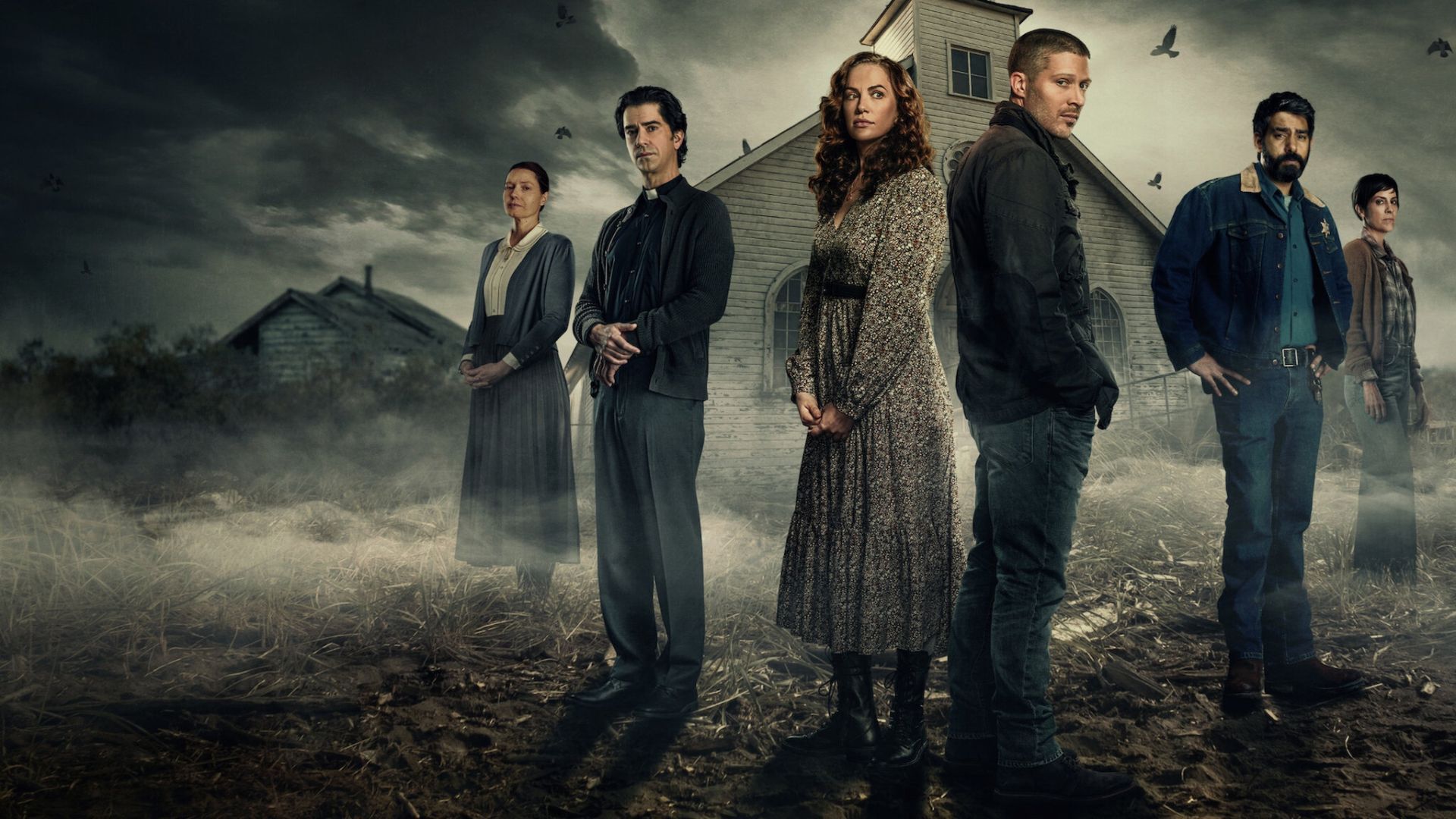
Midnight Mass was released on Netflix on September 24, 2021. The miniseries is a seven-part horror that was produced, written, and directed by Mike Flanagan, the creator of The Haunting of Hill House and The Fall of the House of Usher.
The show is set on a remote fictional island called Crockett Island, and stars Hamish Linklater, Kate Siegel, and Zach Gilford. Unlike most horror television, it was not rooted in a book or pre-existing narrative, instead, it was a completely original premise that Flanagan had been toying with over the years, even planting subtle allusions to it in his previous projects.
Four years after its release, Flanagan has now opened up on how close the show was to never being produced at all, and why he believes a show like this wouldn’t be made today. The director appeared humble and thoughtful as a guest on the podcast Flanagan’s Wake, devoted to his body of work. His remarks may leave viewers feeling of the show feel not only grateful that the show exists, but also a bit sad that it might actually be unlike any other piece of television made.
Why Mike Flanagan believes Midnight Mass was a once-in-a-lifetime show

At first glance, Midnight Mass resembles a slow-burn horror series in which a vampire comes to a small, isolated island town under the guise of a young priest named Father Paul. However, the horror is nearly irrelevant to the subject matter of the show. Midnight Mass is concerned heavily with faith, religion, addiction, guilt, and what people will do or believe when they are desperate.
The show features a lot of monologues and silent conversations. Characters discuss life, death, and God extensively. There are no easy answers. The show does not attempt to inform the audience what to believe. It merely poses questions and leaves them to rest with the viewer.
Flanagan himself described it as:
“...a show about internal dialogue and homilies… It was really just a song at the end of the day, about faith, and life, and how we treat each other, and it's hard to sell that.”
That inability to sell the idea is precisely why the show nearly never came to pass in the first place and why Flanagan does not believe it would come to pass should he attempt to pitch it now.
“It still amazes me that Netflix made Midnight Mass, frankly. There’s nothing about it on paper that makes sense to make. It's just not a show you make. And I think it got made because 'Bly Manor' did so well, and, well, because 'Hill House' did so well, really.”
So how did it get made? It all boils down to timing, leverage, and a very particular time in the history of Netflix. Flanagan had already produced The Haunting of Hill House, a massive success for the streaming giant, by the time it came to pitching this show. The success provided him with actual bargaining power.
Netflix accepted this, and the shooting began. However, things were not that simple. By the time Midnight Mass was completed, the executive leadership of Netflix had changed significantly during the process of production. To top this, the COVID-19 pandemic had interrupted filming, which ironically gave the production the freedom and lack of interference with the studio that it would have otherwise received.
The period in which it was produced also contributed to the success of the show. It came at the right moment when Netflix was saying yes to everything, Flanagan said. However, the industry is not like that anymore. Streaming services at the time were throwing money at wildly ambitious and offbeat projects, which could not endure the more conservative financial climate they would soon enter.
 Trending
Flanagan simply said that he does not believe the show could be made today. It is a blunt sentence, though not a nasty sentence. More than anything, Flanagan appears to perceive Midnight Mass as something valuable exactly because it is so out of place. It was an extremely personal project, one which could be traced to his own Catholic background, to his own alcohol addiction, and to his own miseducation of religion. He had had the idea in his mind all along, and it was only when Hill House had provided him with that platform that he was ready to see it through.
To the admirers of the show, the honesty of Flanagan comes out like a gift and a gut punch. It proves that what many people already guessed: Midnight Mass was not only a great show, but a fortunate one. The stars aligned in a manner that might never come together again. And that, more than anything, is what makes it worth revisiting.




 Reply
Reply


